Fleet Exception and Substitution Rules
Added equipment can interrupt a standard fleet graphic without removing the need for a coherent fleet identity. A service body, lift, rack, compartment, intake, camera, light, or access panel may occupy the planned logo position.
The immediate task is not to improvise a new layout. Record the conflict, compare a proposed substitution with the standard treatment, and preserve the reasoning for the next handoff.
A useful exception record answers five questions:
- Which fleet branding standard is affected?
- What equipment creates the observable conflict?
- Which identity elements cannot remain in their standard position?
- What substitution retains the intended hierarchy?
- Which questions still require measurement, permission, preflight, or responsible-party confirmation?
More specific pages
These pages continue the topic in smaller, more specific directions.
Exception and Substitution Are Different Decisions
A fleet graphics exception is a documented departure from the standard treatment for a specific vehicle configuration. It responds to an identified constraint, not a general preference for variety.
A substitution is the replacement treatment proposed for the affected area. It may change placement, scale, orientation, grouping, or the division of graphic elements across panels.
The exception explains why the standard treatment is disrupted. The substitution explains what may replace it. Neither decision establishes that the proposal fits the vehicle or is ready for production.
Keep the exception vehicle-specific. A layout that resolves a compartment conflict on one body profile may fail on another with different seams, doors, or equipment envelopes.
Start With the Configured Vehicle
Review the vehicle as configured, not as an empty template. Record the body type, relevant profile, glass line, wheel arch, panel breaks, door arrangement, and visible equipment boundary.
Then name the added component precisely. A note such as “equipment in the way” cannot support a later comparison or revision.
- Identify the equipment or upfit component.
- Mark its location on the vehicle profile.
- Name the standard graphic area it occupies or divides.
- Note any door, hatch, compartment, cover, or access function involved.
- Identify the displaced brand element.
- List the drawing, measurement, photograph, or specification still needed.
Checkpoint: Name the obstruction.
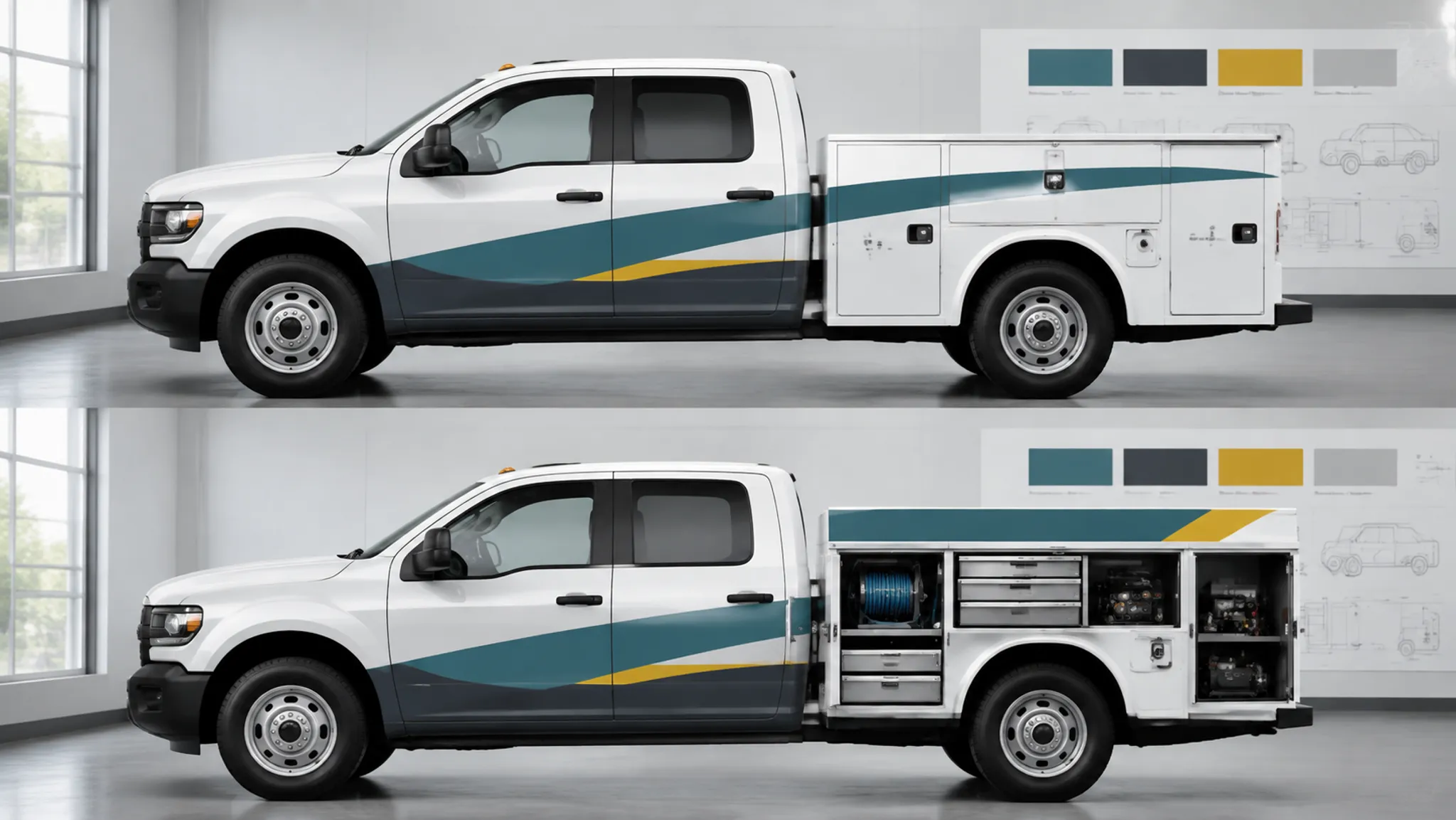
The concept image may show a placement conflict. Exact clearance and final fit require current vehicle measurements, equipment records, and confirmation from the responsible project party.
Name the Affected Fleet Branding Standard
The record should identify the exact treatment that cannot be followed unchanged. Avoid broad statements such as “the vehicle does not match the guide.”
The affected standard may concern:
- Primary logo position or wordmark configuration
- Fleet identifier or service descriptor placement
- Color-field length, band height, or body-side alignment
- Sponsor tier or grouping
- Rear identification treatment
- Cab-to-body graphic relationship
- Spacing around a controlled mark
- Alignment with a body line, glass line, or door seam
This baseline keeps the substitution tied to a defined standard. Use the current project document and record its version or date; memory and old mockups are not stable controls.
Describe the Observable Conflict
The conflict statement should report what appears on the supplied vehicle profile without turning visual inference into a technical conclusion.
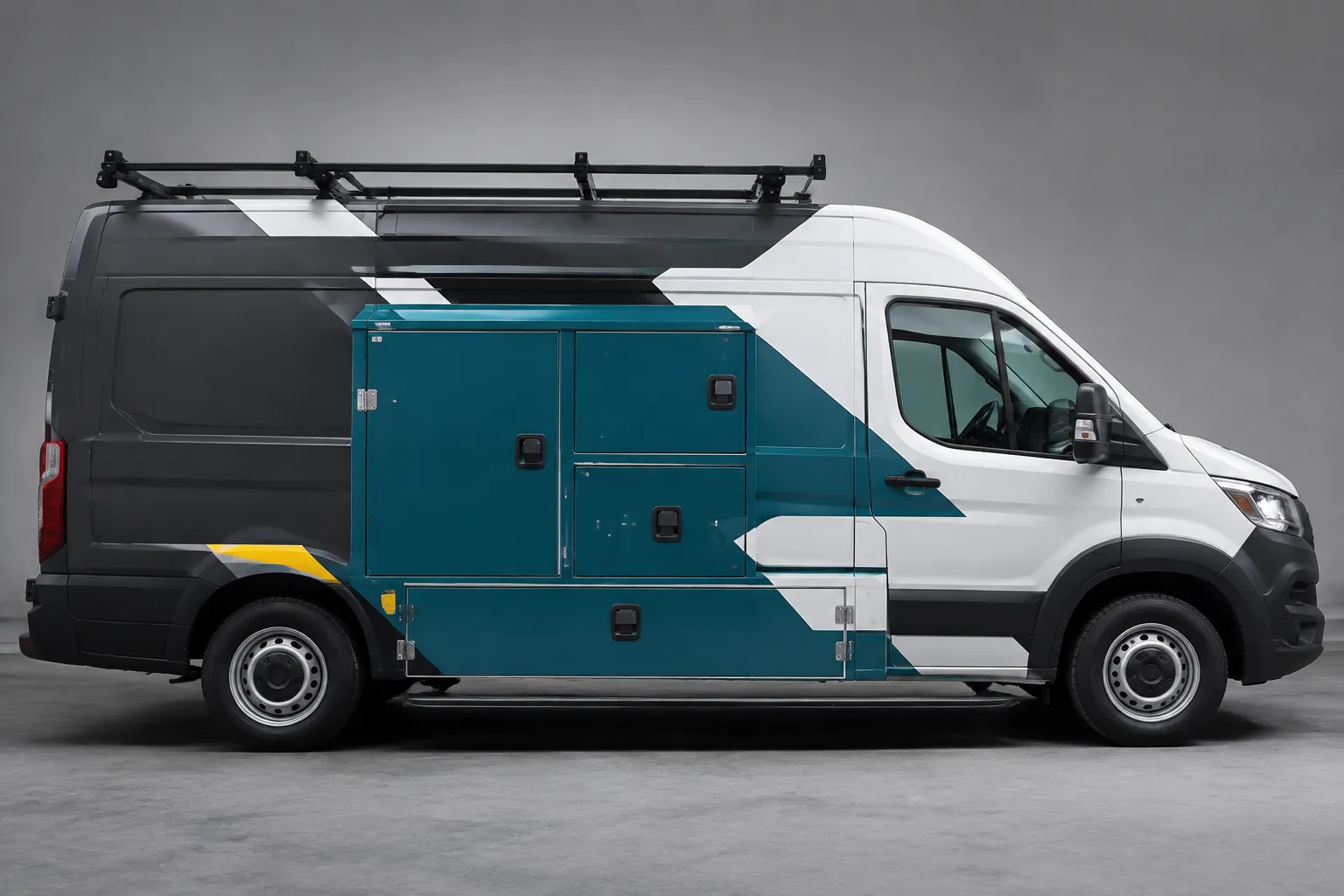
In this concept-stage mockup, the added side compartment divides the standard wordmark area across two doors and an access panel. The operating envelope and final clearances remain to be confirmed from current equipment documentation.
Panel Geometry
Record where the graphic meets a panel break, contour, wheel arch, door seam, equipment edge, or abrupt surface change. The area may remain available but become fragmented or dependent on several moving panels.
Equipment Access
Mark visible handles, hinges, latches, service openings, removable parts, and operating paths. A flat render cannot settle access or clearance questions.
Visual Interruption
Describe how the equipment changes the read. A mark may remain present while losing continuity, contrast, or recognition at the stated viewing distance.
Identity Hierarchy
Identify which cue loses priority: the primary mark, fleet number, service label, sponsor mark, or unifying color field. The existing hierarchy should determine what the substitution works hardest to retain.
Compare Both Treatments Under the Same Conditions
A standard fleet treatment comparison is useful only when the standard and proposed substitution appear on matched views.
- Use the same vehicle profile and equipment configuration.
- Keep the crop, camera angle, background, and approximate scale consistent.
- Include the same identification, service, and sponsor elements.
- State the viewing distance or presentation size.
- Keep lighting assumptions comparable where they affect contrast.
Hold the viewing condition steady.
Changing the angle or enlarging one variant can create an apparent advantage unrelated to the substitution. Research from adjacent recognition settings supports testing visual combinations under comparable exposure, but it does not provide fleet-specific size or visibility thresholds.
Close View
Inspect interrupted letterforms, uncertain alignments, equipment edges through important marks, and graphics split across independently moving panels. This reveals visible construction problems in the concept, not material or application performance.
Normal Review View
Reduce both variants to the scale used in approval presentations. Note what reads first and whether secondary information has displaced the primary identity cue.
Distance or Motion-Like View
Reduce detail and exposure where the mockup permits. Record which elements remain recognizable and which merge into equipment, windows, body color, or secondary copy. Treat this as a comparison, not a road-use or safety determination.
Judge What the Substitution Retains
Do not judge a proposal only by the graphic area recovered. Record whether it retains the intended order of information and the cues that connect the vehicle to the wider fleet.
| Review variable | What to compare |
|---|---|
| Primary identity | Whether the principal mark remains continuous, recognizable, and visually dominant |
| Hierarchy | Whether brand, service, unit, and sponsor information retain their intended order |
| Fleet relationship | Whether color, configuration, and position still connect the vehicle to related units |
| Panel relationship | Whether important elements cross seams, access panels, contours, or equipment edges |
| Viewing condition | Whether the same cues hold at close and reduced presentation scales |
Fleet consistency does not always require identical coordinates. A vehicle-specific exception may move a mark while preserving its hierarchy, color relationship, and recognition role.
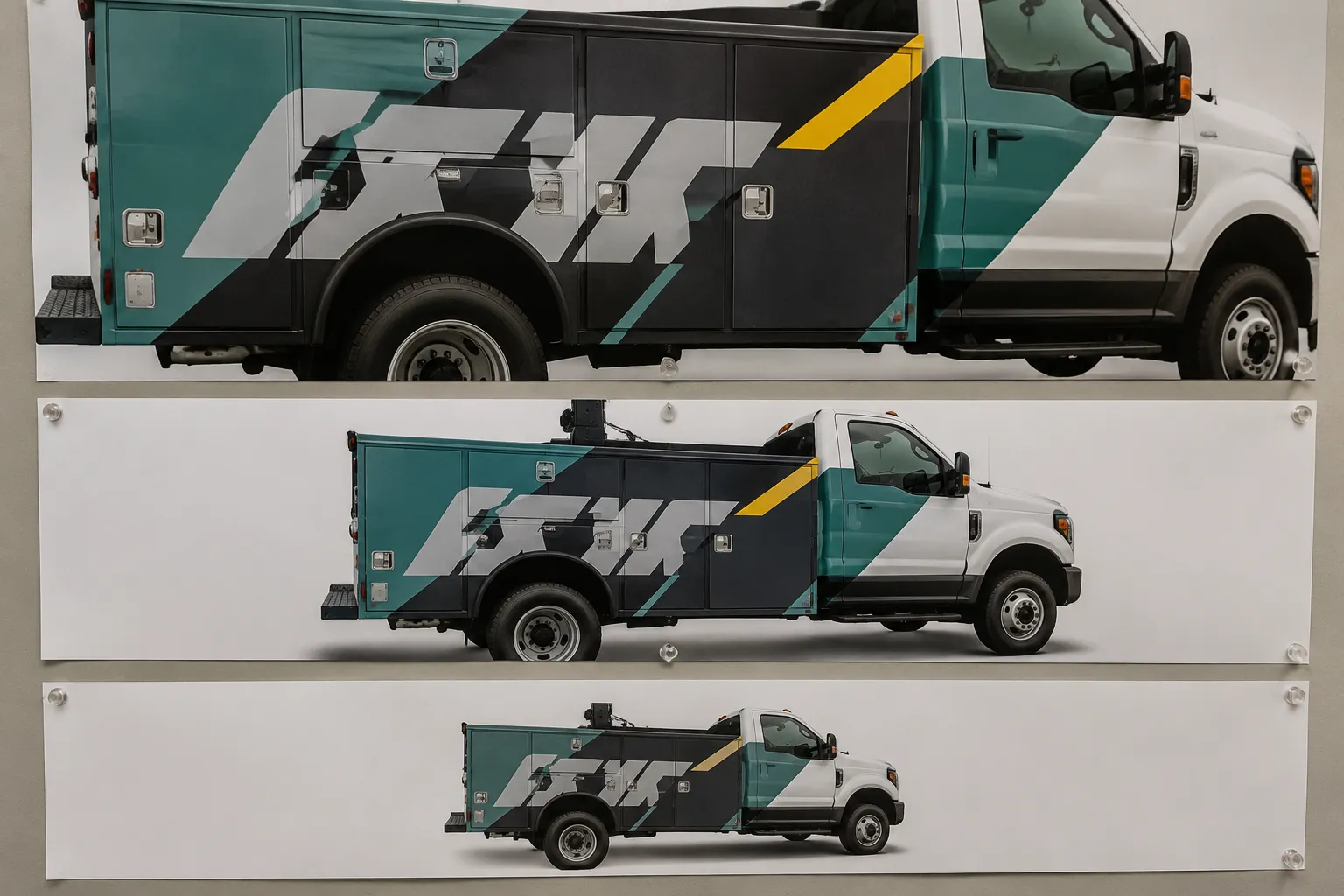
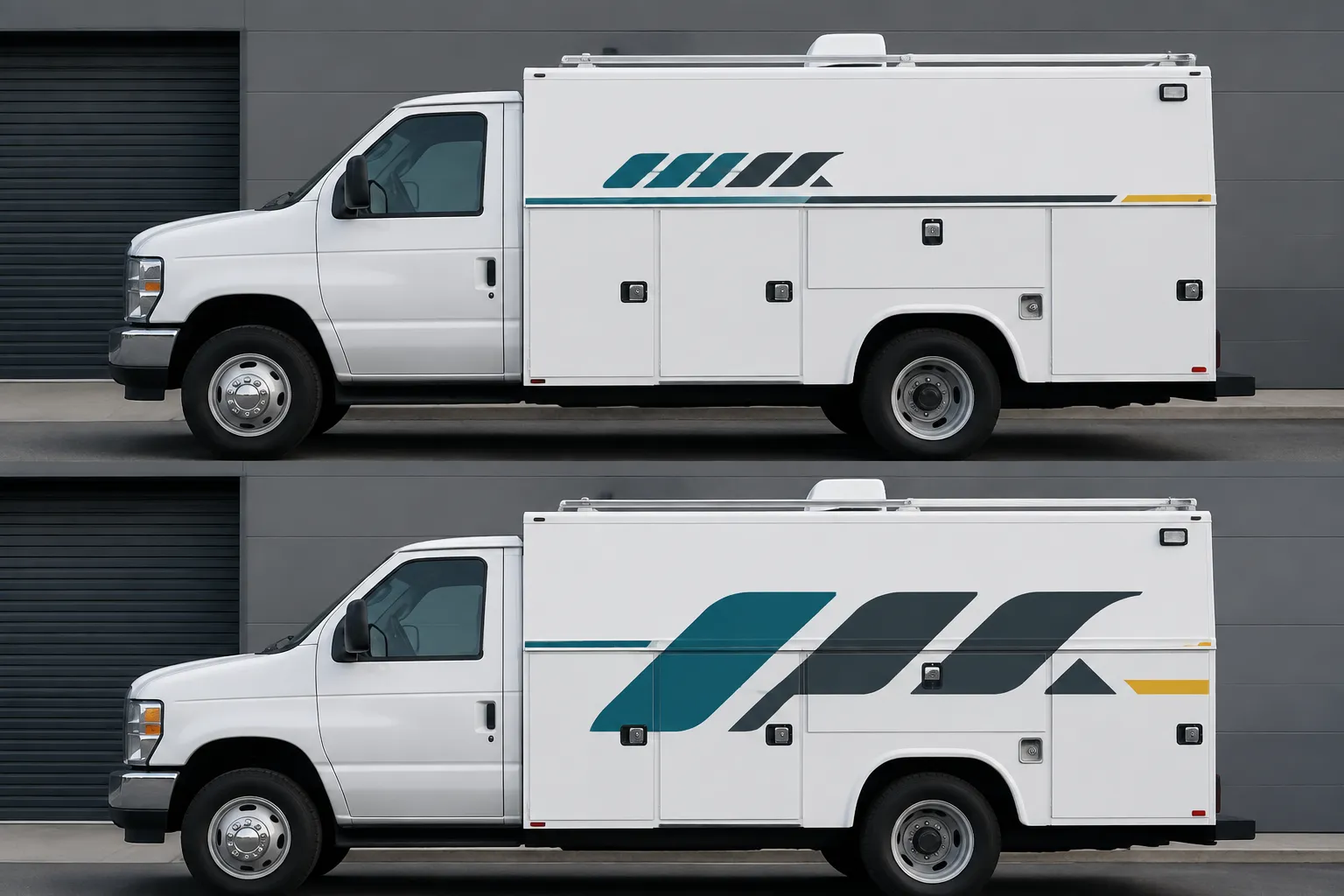
On this vehicle profile, moving the wordmark above the body line restores continuity but reduces its available height. The lower position allows greater scale but crosses two compartment doors.
The visible tradeoff is continuity against scale. Record that choice without declaring either arrangement universally superior.
Limit and Explain Every Change
List retained and changed elements separately. This prevents a narrow placement problem from becoming an untracked redesign.
Possible changes include logo position, wordmark scale, configuration, service-copy placement, color-field length, unit-number position, sponsor grouping, element order, or an omission pending another review.
Connect each change to the documented conflict. “Looks better” will not survive handoff. “Moves the primary mark away from the equipment break while retaining the standard color relationship” gives later reviewers a usable rationale.
Checkpoint: Limit the departure.
Build a Record That Survives Handoff
No universal fleet graphics exception form is established by the available sources. A project record should still preserve the same core decision units.
- Vehicle and configuration: Record the fleet unit, body configuration, relevant view, and added equipment.
- Affected standard: Name the current drawing, layout, or brand-guide section, including its version.
- Conflict description: Mark the equipment boundary and affected graphic area on the comparison view.
- Proposed substitution: Describe the changed placement or treatment in plain language.
- Retained and changed elements: Show what remains consistent and what departs from the standard.
- Comparison views: Include matching standard and exception mockups labeled as concept-stage images.
- Open questions: Assign each missing measurement, specification, permission, or production decision.
- Revision history: Record the identifier, date, file owner, change summary, reason, and notified reviewers.
- Review status: Track distinct decisions rather than relying on one broad sign-off.
Adjacent automotive release-process research illustrates why a change should remain connected to its reason, version, and responsible decision point. It does not define a fleet exception procedure.
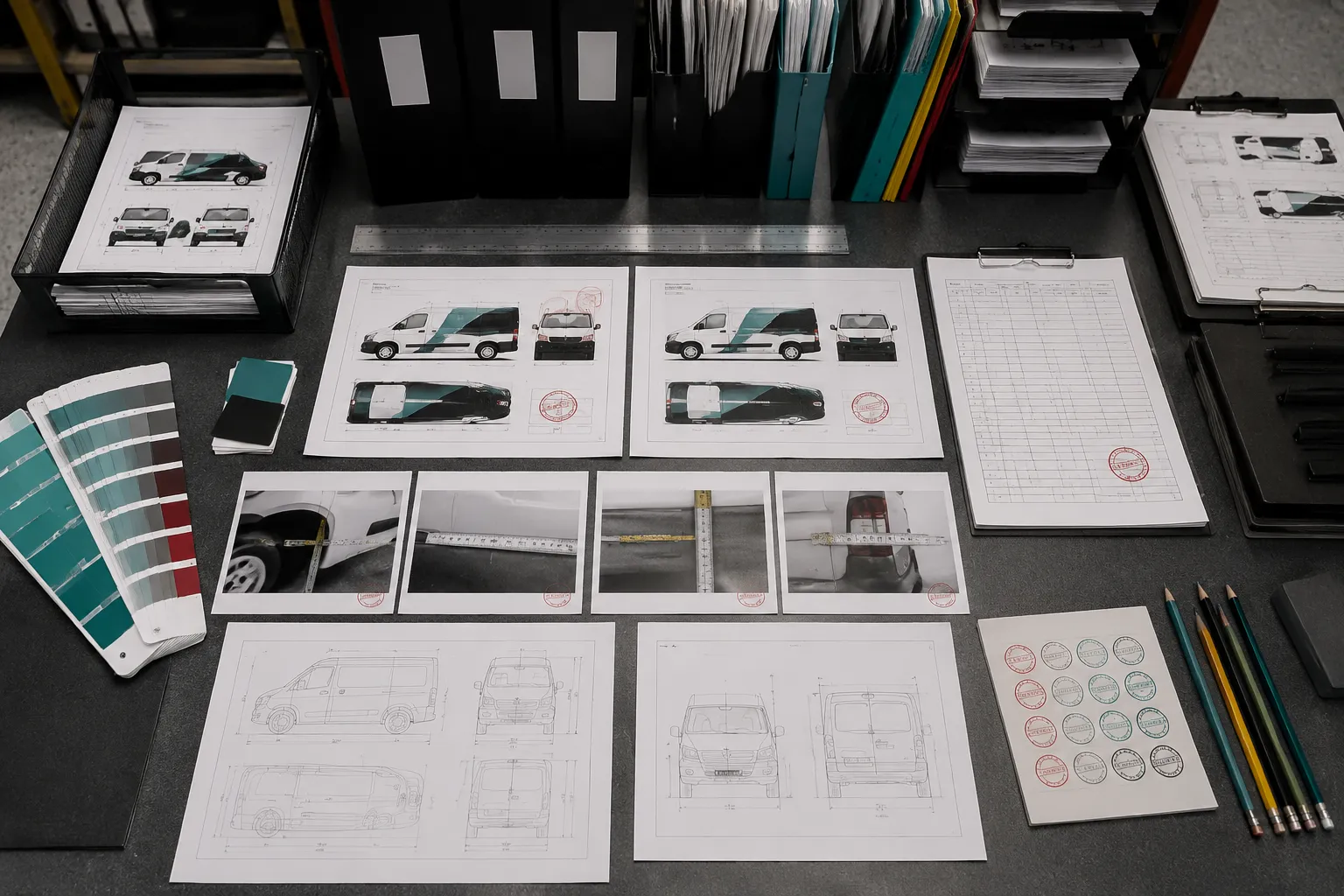
Keep Review Statuses Separate
A concept may pass one review while remaining open in several others. Use labels that state exactly what has been considered.
- Concept review: Visible hierarchy, placement, contrast, and fleet relationship have been assessed.
- Brand-owner review: The departure has been considered against the current identity documents.
- Rights review: Trademark, sponsor, image, or controlled-asset permissions have been documented by the responsible rights holder.
- Measurement confirmation: Relevant vehicle and equipment dimensions have been attached or confirmed.
- Technical preflight: Current artwork, color targets, construction, and output requirements have been reviewed by the producer.
- Equipment review: Access and operating questions have been checked against current documentation.
- Local-requirement review: Applicable markings and road-use obligations have been checked through current sources.
- Installer review: Vehicle surfaces, access, sequencing, and proposed application have been considered.
- Release decision: The named project owner has identified the version authorized for the next defined stage.
One status does not grant another. A favorable concept review does not establish rights, dimensions, technical accuracy, material suitability, or installer acceptance.
Assign Open Questions to the Right Owner
The designer owns hierarchy, alignment logic, comparison conditions, approval mockups, and revision records. Vehicle facts must come from current project documents rather than the concept file alone.
The fleet owner or brand reviewer identifies the controlling brand documents and decides whether the departure preserves the intended fleet relationship.
The equipment supplier or upfitter provides drawings, dimensions, access requirements, component boundaries, and operating envelopes within its responsibility.
The rights holder confirms permission for trademarks, sponsor marks, licensed images, and controlled assets. An earlier mockup is not a current permission record.
The graphics producer reviews artwork, output methods, color references, construction, and finishing requirements. Research on outdoor graphics indicates that construction, application, and exposure affect performance, but current material behavior remains project-specific.
The installer assesses actual surfaces, contours, seams, equipment interfaces, access, and application sequence. The installer should receive the same exception version reviewed by the other parties.
The responsible project authority checks required markings, visibility obligations, and local road-use rules through current applicable sources. The concept record should flag these questions, not answer them from appearance.
Record Color Changes Separately
Added equipment may interrupt a color field or place a brand mark over a different body surface. A screen mockup shows the intended relationship but cannot establish the physical result.
- Record the controlling brand-color reference.
- Identify the production target supplied to the producer.
- Note any alternate treatment permitted by current brand documents.
- Name the surface or body color behind the graphic.
- State whether a physical proof or production sample is required.
- Identify who determines the acceptable tolerance and which record controls that decision.
Do not treat a sampled photograph, screen preview, named spot color, or process-color recipe as interchangeable evidence.
Common Documentation Mix-Ups
Treating Equipment as Permission to Delete
Equipment explains the constraint. It does not automatically justify removing primary identification, changing sponsor tiers, or dropping information controlled elsewhere.
Calling Every Variation an Exception
Routine adjustments within an established vehicle-specific system may not require a separate exception. The current fleet documents should define that boundary; where they do not, record the decision rather than assuming silence permits it.
Reviewing Only the Proposed Variant
An isolated mockup hides the degree of departure. Matched views reveal what improves, what weakens, and what remains unresolved.
Using a Persuasive Render as Fit Evidence
A render can demonstrate placement intent and visible hierarchy. It cannot confirm dimensions, clearance, surface condition, print behavior, or application feasibility.
Combining Every Decision Into One Sign-Off
A single field can conceal missing rights, measurements, technical review, or installer input. Separate statuses make the remaining work visible.
Confusing Consistency With Identical Placement
Forcing a standard treatment through equipment breaks may preserve coordinates while weakening recognition. Moving every element freely may solve the local conflict while losing the fleet relationship. Compare retained hierarchy, recognizable cues, and the wider system.
A Concept-Stage Comparison
Consider a hypothetical service vehicle with side compartments occupying the standard door-logo area. In the standard mockup, the primary wordmark spans the front and sliding doors; on the configured profile, a compartment edge cuts through the mark.
Variant A moves the complete wordmark above the equipment. The mark remains continuous, but its available height and scale decrease.
Variant B retains the original scale and divides the wordmark around the compartment. The larger letters dominate at close view, but the interrupted form becomes harder to read when both images are reduced equally.
The visible tradeoff is continuity against scale. A traceable concept record could select Variant A for continued review, record reduced scale as the accepted visual compromise, and leave final dimensions and equipment envelopes open.
The same entry would identify separate owners for brand review, measurement confirmation, producer preflight, rights questions, applicable marking review, and installer input. The mockup settles direction, not production.
Minimum Handoff Package
Before the exception moves to another project stage, assemble enough material for the next party to reconstruct the decision.
- Vehicle or fleet-unit identifier
- Configured vehicle profile and equipment description
- Current affected fleet standard
- Observable conflict statement
- Matched standard and substitution views
- Stated viewing conditions
- Retained, changed, and omitted elements
- Decision rationale and visible tradeoff
- Revision history
- Open measurements and specification questions
- Available vehicle and equipment records
- Color targets and proof requirements
- Rights, sponsor, and local-requirement questions
- Separate review statuses
- Named owner for every unresolved item
- Version designated for the next handoff
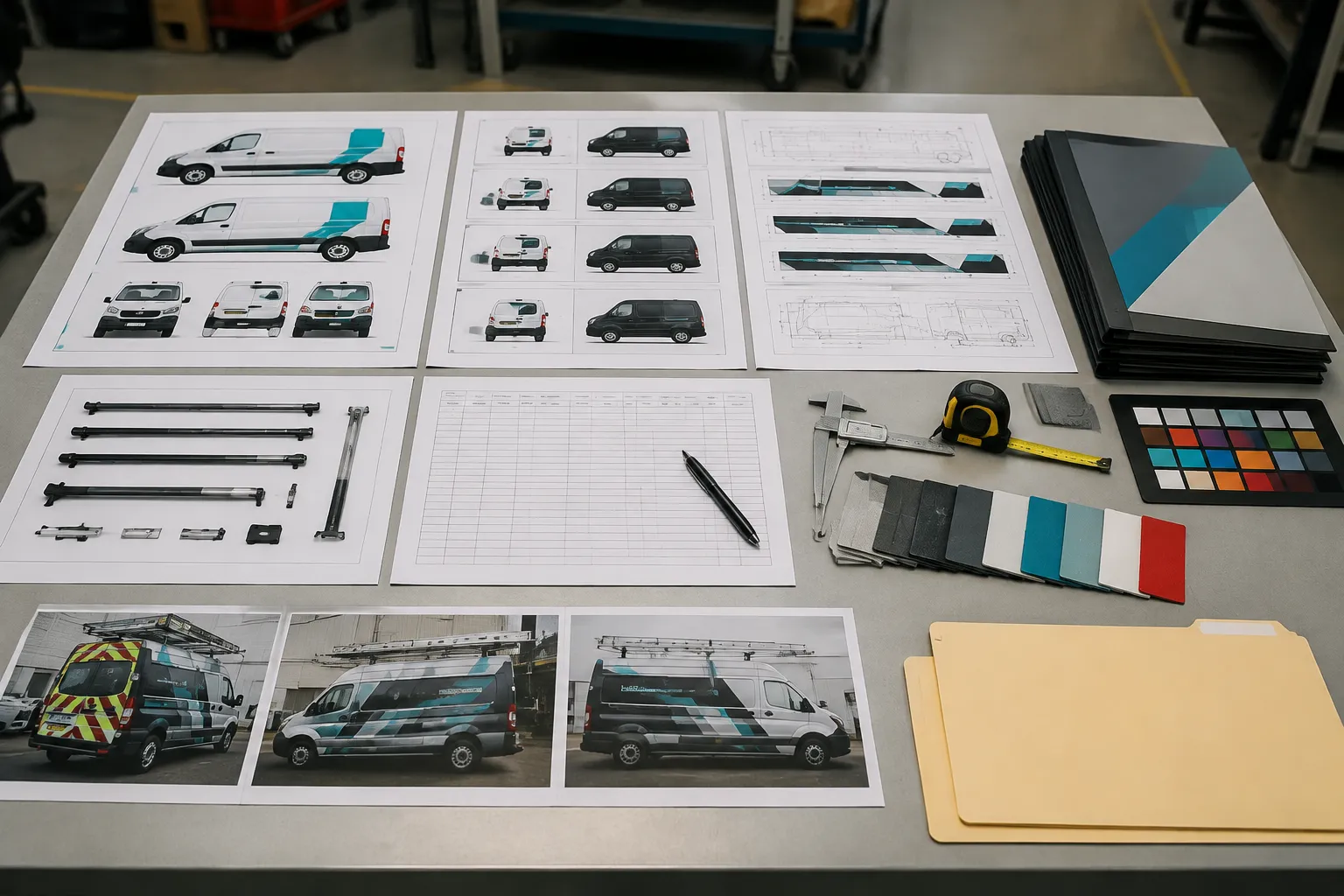
Evidence Boundary
The available public research provides indirect support for several working principles: visual consistency can contribute to recognition, added information can create recognition tradeoffs during limited exposure, graphic performance depends on construction and exposure conditions, and controlled release work benefits from traceable records.
Those sources do not establish a universal fleet exception policy. Exact dimensions, access, color tolerance, permissions, material suitability, fit, required markings, and release status must come from current project documents and the parties responsible for those decisions.
The handoff threshold is therefore documentary. Record the disrupted standard, observable conflict, controlled comparison, retained identity cues, chosen tradeoff, revision state, and owner of each unresolved question.
Fleet Exception Review Checklist
- Is the vehicle and equipment configuration identified?
- Is the affected fleet branding standard named and versioned?
- Is the placement conflict observable in the supplied view?
- Are standard and exception variants shown under matching conditions?
- Are retained and changed elements listed separately?
- Does the intended hierarchy remain understandable at the stated viewing distance?
- Are close-view and reduced-view tradeoffs recorded?
- Are mockup observations separated from measurements and technical facts?
- Are access, color, rights, and local-requirement questions assigned?
- Have the producer and installer received the current version and relevant records?
- Does the revision history explain what changed and why?
- Do the statuses show what remains unresolved?
- Is one version identified for the next project stage?
A substitution is ready for handoff when another reviewer can follow the decision without guessing. Record the selected direction, then assign the remaining measurements, permissions, technical checks, and release decisions to their responsible owners.
Sources
- Visual Communication in Shared Mobility Systems as an Opportunity for Recognition and Competitiveness in Smart Cities
- Image Permanence: Commercial Signage/Fleet Graphics
- Effects of Adding Dual-Logo Panels to Specific Service Signs: A Human Factors Study
- Process improvement of the emission decal design and release process utilizing a system dynamics approach