When a Fleet Logo Variation Stops Reading as the Same Identity
A fleet logo variation stops reading as the same identity when the changes disrupt the cues viewers use to connect one vehicle with the others under the same viewing condition.
There is no universal logo-size, color-difference, or placement tolerance. The judgment depends on the identity being tested, the vehicle profile, the viewing distance, the angle, and which cues remain stable.
What Fleet Logo Consistency Means
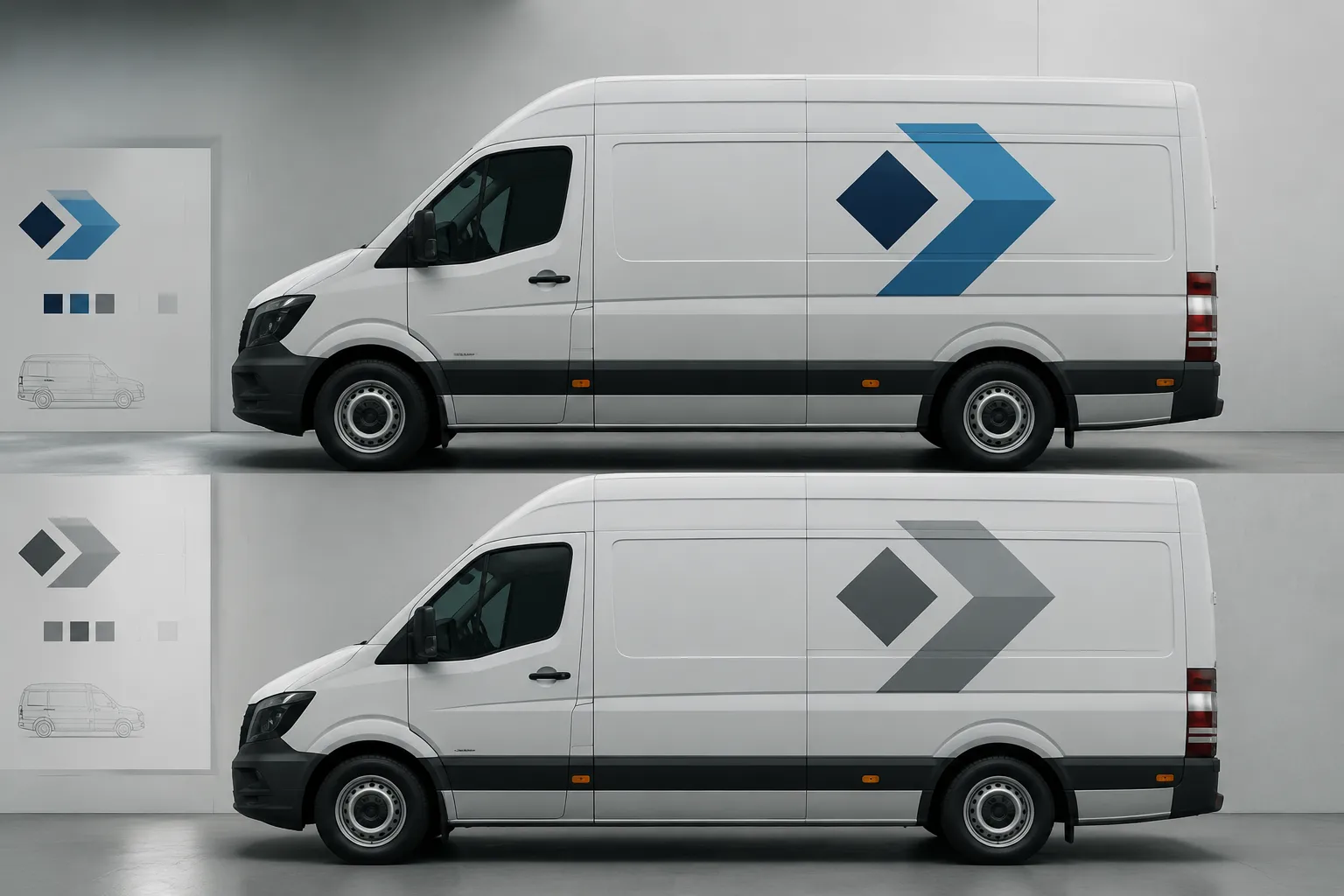
Fleet logo consistency is the degree to which vehicles continue to read as members of one visual system when their bodies, models, panels, or applications differ.
Consistency does not require identical vehicles. Different body styles, service categories, sponsor tiers, or colorways can belong to one system when the recurring identity cues remain connected without requiring close inspection.
- Distinctiveness means the vehicle stands apart from its surroundings.
- Recognition means it reads as belonging to the intended fleet or brand.
- Consistency means the recurring identity cues remain coherent across variants.
A vehicle can be highly distinctive and still fail the fleet test. An unusual graphic, isolated accent color, or oversized sponsor mark may attract attention while weakening the connection to the core identity.
Start With the Stable Cues
Begin with the reference vehicle and identify the cues that carry its identity. In a concept-stage review, these may include:
- the primary logo form;
- the logo position relative to the body line or glass line;
- the main color relationship;
- the direction or shape of a recurring graphic;
- the proportion between logo, vehicle body, and sponsor marks;
- the visual order between the fleet brand and secondary messages.
These cues do not carry equal weight. A small colorway adjustment may preserve recognition when the logo form, position, and hierarchy remain stable. A modest placement change may matter more if it moves the mark away from the area where the fleet identity is normally expected.
Research on visual recognition supports the role of recurring cues, but it does not establish which cue matters most for a particular fleet. That must be determined on the actual vehicle profile and against the current brand standard.
Find the identity anchors first.
Compare Variants Under the Same Condition
Hold the comparison conditions steady:
- Use the same vehicle profile, viewing angle, and mockup scale.
- Keep the lighting assumption and body area consistent.
- Review both close range and a stated distance.
- Include a stationary view and, where relevant, a motion-oriented view.
This is a concept review, not a validated distance or motion test. Its purpose is to prevent presentation differences from being mistaken for design differences.
If one variant appears larger, brighter, or more favorably angled, the apparent recognition advantage may belong to the mockup. Record the viewing condition beside the comparison so the decision remains reviewable.
Where Variation Usually Crosses the Boundary
Logo Form
Altered proportions, missing components, substituted symbols, or simplified marks can break recognition quickly. A simplified mark may suit a particular application, but it should be treated as a separate identity decision. Confirm the permitted version with the brand owner or rights holder.
Placement
A logo can remain present while becoming visually disconnected from the fleet system. Moving it across a door seam, beneath a heavy contour, or into a low-contrast area changes how the mark participates in the vehicle composition.
On this vehicle profile, inspect the logo against the body line, wheel arch, glass line, and panel breaks. The question is whether it still occupies the same identity role, not merely whether it appears somewhere on the vehicle.
Scale
A smaller logo may lose recognition at distance. A larger logo may dominate the body and make the vehicle read as an advertisement for the mark rather than as one member of a coordinated fleet.
Do not assign a universal minimum or maximum. Compare the logo at the project’s relevant viewing condition, then confirm vehicle-specific dimensions with the designer and producer.
Colorway
Color is often one of the faster cues viewers notice across vehicles. Research on shared-mobility fleets describes inconsistent vehicle colors as a recognition problem, particularly where vehicles must be identified among similar vehicles.
That does not mean every fleet needs one body color. A planned colorway system can support variation when the recurring logo, contrast relationship, and hierarchy remain clear. The change becomes more disruptive when it removes several identity cues at once.
Treat screen color as a concept indication. Current brand specifications and producer confirmation are needed for project-specific color decisions.
Sponsor Hierarchy
Sponsor marks can occupy substantial visual space on racing and commercial fleet vehicles. The issue is not simply the number of marks. It is whether the sponsor tier changes the apparent ownership or identity of the vehicle.
- Which mark is seen first?
- Which mark remains visible at the selected distance?
- Does the sponsor graphic interrupt the recurring body graphic?
- Does the sponsor treatment vary without a recorded rule?
- Does a sub-team or event colorway retain the fleet’s main cues?
The visible tradeoff is often sponsor prominence versus fleet recognition. Record the chosen hierarchy instead of resolving it through informal preference.
A Compact Comparison Ledger
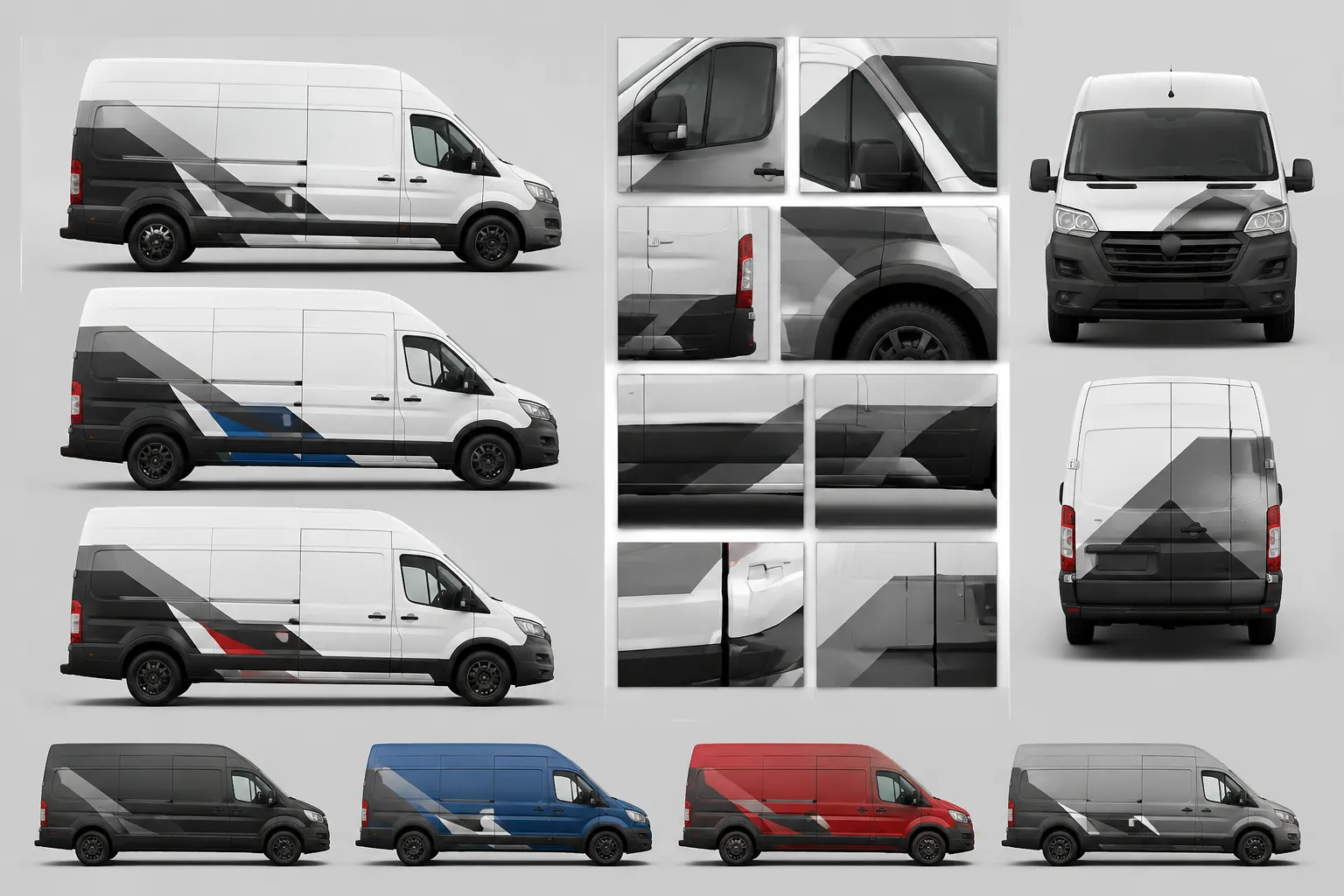
Use a simple ledger for two concept variants on the same vehicle profile.
| Review point | Variant A | Variant B |
|---|---|---|
| Logo form | Same, simplified, or changed | Same, simplified, or changed |
| Logo position | Relation to body line and panel breaks | Relation to body line and panel breaks |
| Logo scale | Relative to door, cab, or side panel | Relative to door, cab, or side panel |
| Main colorway | Recurring colors that remain | Recurring colors that remain |
| Sponsor tier | Primary, secondary, or competing | Primary, secondary, or competing |
| Distance view | What remains visible | What remains visible |
| Motion concern | What may disappear or merge | What may disappear or merge |
| Decision | Retain, revise, or escalate | Retain, revise, or escalate |
The ledger keeps the review tied to observable changes. It prevents “this feels less consistent” from becoming the entire record.
Planned Variation Can Still Belong to One Identity
Variation is not automatically fragmentation. Vehicle classes, campaigns, sponsors, regions, or operating roles may require different treatments within one broader system.
The boundary is whether the system retains a stable reference point and visible rules for what may change. Without those rules, each new vehicle can introduce another interpretation.
- Which elements are fixed?
- Which elements may vary?
- Which variations identify a vehicle class or sponsor tier?
- Does each variant retain enough recurring cues?
- Who records and approves a new exception?
If these questions have no clear owner, the issue has become a handoff problem between the brand owner, designer, sponsor representative, and production team.
Read It at Distance
A close mockup can make every variant appear coherent. Distance removes detail and leaves larger shapes, contrast relationships, and dominant placement.

- Inspect the logo and panel relationships closely.
- Reduce the image until small detail becomes difficult to read.
- Compare the main color blocks and body-line graphics.
- Check whether the fleet mark still outranks secondary graphics.
- Repeat the comparison from another relevant angle.
- Record which cue disappeared first.
This does not establish real-world visibility or motion performance. It identifies a concept-stage recognition question for the appropriate project process.
Common Misunderstandings
“The logo is present, so the identity is preserved.”
Presence is only one condition. Contrast, scale, panel breaks, and competing marks can reduce the logo’s role even when its form remains unchanged.
“More variation makes the fleet easier to notice.”
Variation can increase distinctiveness while reducing recognition. A vehicle may stand out from its surroundings and still fail to read as part of the intended fleet.
“The same color guarantees consistency.”
Color helps, but it does not replace logo form, placement, hierarchy, or recurring graphic structure.
“A close-up approval mockup is enough.”
A close view mainly tests detail in the concept image. It does not show how hierarchy survives at distance, from another angle, or during movement.
“A tolerance can be borrowed from another fleet.”
The available material does not provide a transferable numerical tolerance. A rule for one identity, vehicle class, or production system should not be treated as a general fleet standard.
What to Record When a Variant Crosses the Boundary
Write the decision in observable terms:
Variant B no longer reads as the same fleet identity in the side-view comparison because the logo moved below the recurring body line, the main color relationship changed, and the sponsor mark became the dominant cue at the selected viewing condition.
Then assign the next action:
- Designer: restore or test the identity anchor and provide a revised approval mockup.
- Brand owner: confirm permitted logo versions, colorways, and hierarchy rules.
- Sponsor or rights holder: confirm permission for the proposed mark, placement, and variant treatment.
- Producer: confirm current files, dimensions, color specifications, and preflight requirements.
- Installer: confirm vehicle-specific panel conditions, seams, contours, and installation constraints.
- Vehicle owner or fleet manager: confirm which vehicle classes and operating conditions the comparison must represent.
The concept demonstrates a visible hierarchy. It does not establish measurement, material suitability, rights status, print behavior, or installation outcome.
The Decision to Carry Forward
A fleet logo variation remains within the same identity when the reference cues survive the agreed comparison: the logo retains its intended role, the color and graphic relationships remain connected, and the fleet mark continues to outrank competing information at the relevant viewing condition.
It has crossed the boundary when the viewer must rely on close inspection, prior knowledge, or written explanation to make that connection.
Record the failed cue, the comparison condition, and the responsible next handoff. The mockup settles direction, not production.