Sponsor Hierarchy Planning
When a sponsor mark competes with the team identity on a vehicle profile, inspect the agreement, the panel geometry, and the viewing condition together. A livery sponsor hierarchy is not decided by logo size alone.
Start with two working records: the sponsor agreement and the actual vehicle profile. List each sponsor tier, permitted mark, required wording, color condition, proposed surface, and related deliverable. Then place those requirements against the doors, hood, roof, rear quarter panels, deck lid, glass line, wheel arches, vents, seams, and other visible interruptions.
Fast verdict: choose the direction that remains understandable across the intended views, while recording rights, measurement, production, and installation questions for the people responsible for confirming them.
What the Hierarchy Organizes
A hierarchy separates the vehicle's visual roles before the layout becomes crowded. A working map may include:
- Base color or primary colorway
- Team, fleet, or vehicle identity
- Primary sponsor
- Associate or supporting sponsors
- Numbers and identification marks
- Decorative stripes, patterns, and accents
- Technical or series-required markings
- Small supporting details
The terms primary sponsor and associate sponsor are useful labels in sponsor packaging and agreement discussions. They are not universal visual rules for every race car, fleet vehicle, or commercial livery.
A sponsor tier therefore works as both a commercial instruction and a design variable. The agreement may define prominence, frequency, or specific surfaces; the vehicle profile determines whether those instructions remain legible and coherent.
A large mark on a narrow door can lose clarity at the wheel arch. A smaller mark on an uninterrupted rear quarter panel may hold its shape more consistently in the same mockup. The visible result depends on the profile, angle, contrast, surrounding graphics, and viewing distance.
Map the agreement before designing the colorway.
Build a Sponsor Tier Map
Sponsor integration becomes harder when the base colorway is treated as finished before the required marks are placed. A tier map keeps contractual priority visible during early concept decisions.
| Field | Review question |
|---|---|
| Sponsor tier | Is the mark primary, associate, supplier, technical, or another agreed category? |
| Required mark | Which logo, wordmark, descriptor, or combination must appear? |
| Permitted versions | Are light, dark, monochrome, stacked, or horizontal versions allowed? |
| Intended surface | Which vehicle areas are proposed or specified in the agreement? |
| Viewing role | Is the mark intended for close inspection, side view, event photography, or a broadcast angle? |
| Surrounding field | Does the background provide enough tonal separation from the mark? |
| Geometry risk | Will a seam, vent, handle, wheel arch, or contour interrupt the mark? |
| Rights owner | Who confirms the mark, wording, and usage permission? |
| Next dependency | Does the open question belong to the designer, vehicle owner, producer, installer, series, or rights holder? |
Use the map to expose differences between contractual priority and visible priority. Do not use it to invent a ranking that the agreement does not establish.
A primary sponsor may require the largest or most prominent treatment. An associate sponsor may require a smaller field, repeated placement, or another defined benefit. The layout still needs a vehicle-specific review because the same nominal tier behaves differently on a hood, door, roof, or curved rear panel.
Compare Vehicle-Specific Sponsor Surfaces
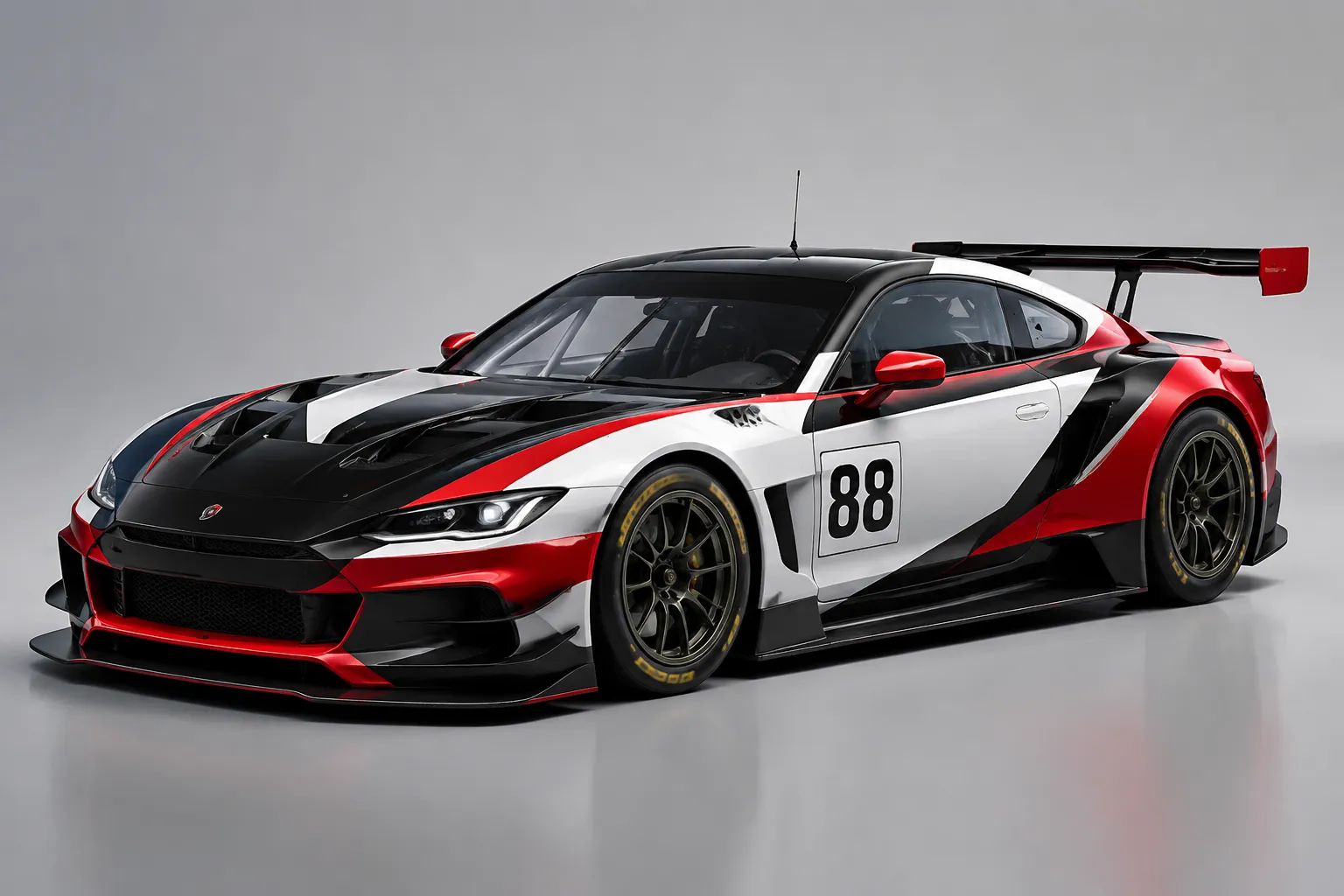
A vehicle surface is not an empty rectangle. Body lines, panel breaks, glass, vents, wheel arches, handles, seams, and aero components divide the available field.
Review each proposed surface from the angle where it is expected to be seen. Note what the viewer encounters before reaching the mark and what interrupts it afterward.
Hood and Front-End Fields
The hood may appear in front three-quarter views, still photography, and elevated viewing angles. Its center line, front edge, badge area, vents, and changing curvature can divide the sponsor field.
In this mockup, a centered mark may establish a clear front identity. A sponsor-colored block may create stronger separation while competing with the vehicle or team mark. The visible tradeoff is between direct recognition and a more dominant sponsor field.
Confirm hood dimensions, contours, openings, and required clearances with the producer or installer. A render does not establish the final usable area.
Roof and Upper Surfaces
A roof mark may appear in elevated event photography, overhead views, or selected broadcast angles. Its role depends on whether those views belong to the intended exposure context.
A roof treatment can strengthen whole-car recognition from above while contributing little to a low side-on view. A broad roof graphic may also alter how the side colorway is perceived. Compare the same concept from ground level before assigning the roof a prominent role.
Doors and Side Panels
Doors provide a familiar reference surface for side views, but handles, door seams, lower contours, glass lines, and wheel arches divide the field.
A mark placed within one uninterrupted area may read more clearly in a side mockup. A mark crossing a door seam may look balanced in a static render but become harder to inspect as the surface and viewpoint change.
Keep the logo clear of interruptions where the agreement allows flexibility. Where the agreement specifies a seam-crossing placement, record that condition for the producer and installer rather than treating the mockup as the production decision.
Rear Quarter Panels
Rear quarter panels can carry strong side and rear three-quarter presence. Their usable field changes with the wheel arch, rear door seam, fuel access area, vents, and body contour.
A mark that fits beside the wheel arch on one profile may become compressed on another vehicle body. Compare the treatment on the actual vehicle silhouette, not only on a generic template.
Rear, Deck Lid, and Identification Areas
Rear surfaces often compete with vehicle identity, numbers, lighting, model marks, and required identification. A sponsor may need a dedicated field, but that field can become crowded quickly.
At close range, several marks may remain distinguishable. At distance, they can merge into one block of visual noise. Preserve a distinction between the sponsor field and the identity field unless the approved concept intentionally combines them.
Inspect the interruptions, not only the logo.
Set the Viewing Conditions Before Judging Placement
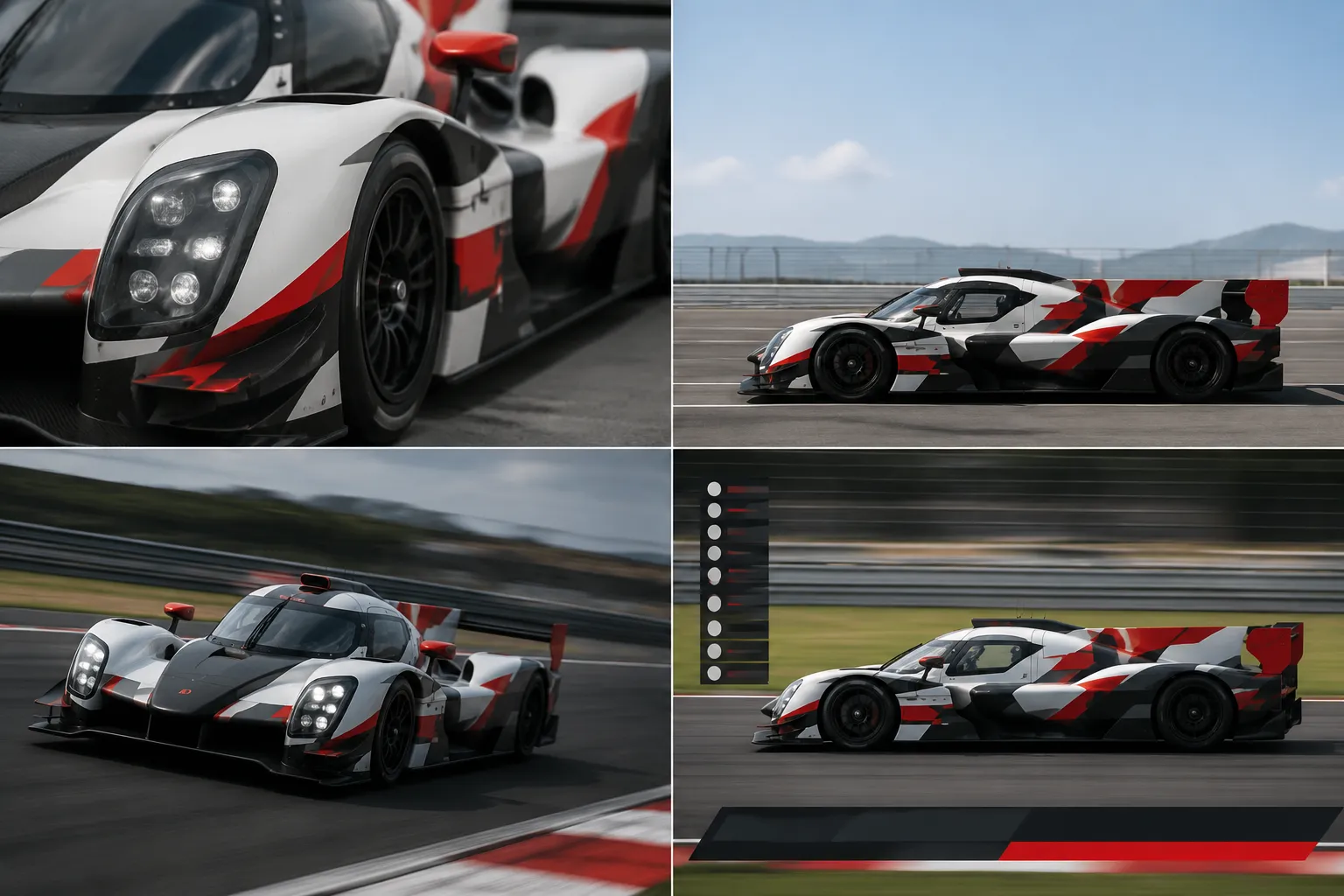
Sponsor visibility is not one condition. Name the condition before judging the placement, then hold it steady while comparing variants.
- Stationary close view
- Stationary full-vehicle view
- Distance view
- Front three-quarter view
- Rear three-quarter view
- Motion-oriented view
- Broadcast-style crop
- Event-photo crop
- Fleet lineup view, where consistency matters
These views create comparable concept-stage checkpoints. They do not establish how people will recognize, remember, or value a sponsor in actual use.
Close View
The close view reveals logo construction, contrast, spacing, and local crowding. Use it to find marks that collide with seams, vents, stripes, or nearby sponsor fields.
Do not let a crisp close view settle the hierarchy. A logo can look precise at large scale while the complete vehicle loses its identity when reduced.
Distance View
Reduce the vehicle to the size at which a viewer is likely to encounter it in the intended setting. Inspect whether the main identity, primary sponsor, and supporting fields still separate visually.
Whole-car recognition at distance should be recorded as an observation within the mockup, not as a general human response. Look at the body line, colorway, number, and primary mark as one system.
Motion-Oriented View
A motion frame changes the problem. Perspective, partial occlusion, blur, and reduced inspection time can make small or low-contrast marks less distinct.
The available material does not establish a universal result for sponsor visibility in motion. It does support separating static logo appearance from exposure conditions, orientation, and image quality. Treat the motion frame as a comparison condition, not a performance result.
Broadcast and Event-Photo Views
Broadcast-style crops emphasize camera position, framing, and duration. Event photography may favor a different side, height, or moment.
Terms such as airtime, camera hierarchy, repeated exposure, and moving billboard can help define the commercial question. They do not establish a universal placement value or sponsor return.
Record which views the agreement actually covers. Ask the rights holder or sponsor contact whether the intended benefit concerns the physical vehicle, broadcast presentation, event photography, social content, appearances, or a wider package.
Compare one variant across every named condition.
Hold Colorway Variants Under the Same Test
Colorway review works best when the sponsor hierarchy stays constant while the surrounding design changes. Otherwise, placement and palette decisions become difficult to separate.
Hypothetical directions might include:
- A quieter base field with a concentrated primary sponsor area
- A stronger sponsor-colored block with more local contrast
- A unified team colorway with sponsor marks integrated into existing bands
These are concept directions, not universal recommendations. For each variant, record the same four observations:
| Question | What to inspect |
|---|---|
| First read | What appears first in the full-vehicle view? |
| Sponsor separation | Does the primary mark separate from the base and adjacent graphics? |
| Vehicle identity | Does the colorway still identify the team, fleet, or vehicle concept? |
| Surface behavior | Do contours, seams, arches, or openings interrupt the intended field? |
A sponsor's brand-color requirements may conflict with a unified livery. A strong color block can improve local separation while breaking the visual rhythm across the vehicle. A restrained treatment can preserve the colorway while reducing contrast in one angle.
Name the conflict plainly. The useful record describes what changed, under which view, and with what consequence.
Resolve the Main Hierarchy Conflicts
Sponsor Prominence and Vehicle Identity
The sponsor field may dominate the agreement, while the vehicle still needs a recognizable team or fleet identity. If the sponsor becomes the only strong shape, the livery may lose its structure in the distance view.
Compare the sponsor field with the base color, number, silhouette, and recurring graphic feature. A consistent body line or color block may carry identity more reliably than several small decorative details.
Large Mark and Uninterrupted Field
A larger logo occupies more area while potentially crossing more body features. A smaller logo may fit within a clearer field and preserve its shape.
Ask which treatment survives the relevant profile and angle with fewer interruptions, rather than asking only which mark is larger.
Color Fidelity and Palette Control
A sponsor may require a particular mark or color treatment while the livery uses another base or accent system.
Test the approved mark in its required version and any permitted alternative. Note where the color relationship changes the apparent size, contrast, or dominance of the sponsor field. Rights and brand-use questions belong to the rights holder.
Repetition and Crowding
Repeating a sponsor across surfaces may support the agreement scope or wider event deliverables. It can also fragment the vehicle when every panel receives a separate treatment.
Map repeated marks across the complete profile. A secondary mark should not accidentally become the strongest visual element because it occupies a high-contrast area.
Numbers and Sponsor Fields
Numbers, identification marks, and sponsor logos may compete on doors, roof areas, or rear surfaces. Keep their roles distinct in the review record.
A number that remains visible in a close mockup may share too much contrast with a sponsor field at distance. Current series or event identification requirements must come from the relevant governing documents or responsible party.
Keep Agreement Scope Separate From Surface Placement
A sponsor agreement may cover naming, marks, categories, appearances, media, event materials, social content, apparel, transporters, pit banners, or other deliverables. Not every benefit belongs on the vehicle.
Separate the agreement into:
- Vehicle surfaces
- Team or fleet materials
- Event and appearance materials
- Photo and broadcast contexts
- Digital or social contexts
- Naming and wording requirements
- Category or exclusivity provisions
- Approval and revision responsibilities
This separation prevents a commercial benefit from becoming an assumed physical placement instruction. A local team package, for example, may connect vehicle placement with photos, social posts, appearances, or event support; that language identifies the commercial question but does not establish that one panel produces greater exposure.
Write the working brief so each requirement has an owner. The sponsor or rights holder confirms permitted marks and scope. The designer translates them into a coherent hierarchy. The vehicle owner confirms the actual profile and use conditions. The series or governing body confirms applicable event rules. The producer and installer confirm what current files and surfaces require.
Review Rights and Identification Separately
A mark can be well placed visually and still require a separate rights review. An identification document is not automatically legal approval for every use.
The available Motorsport UK material supports a narrow distinction between entrant responsibility, identification records, and legal approval. That boundary should not be generalized to every jurisdiction, series, sponsor category, or road-use situation.
For each sponsor field, record:
- Mark version under consideration
- Source of the supplied artwork
- Sponsor or rights-holder approval status
- Series or event restrictions to verify
- Category restrictions to verify
- Wording or naming restrictions to verify
- Jurisdiction-specific questions
- Person or organization responsible for confirmation
Historical sponsorship research can show why category review matters, including indirect branding practices and restricted sponsor categories. Historical examples provide context only; they do not establish current rules for a particular vehicle or event.
Use statuses such as awaiting rights confirmation, awaiting series review, or awaiting owner decision. Keep the status attached to the unresolved question and its responsible owner.
Preserve the Decision in the Revision Record
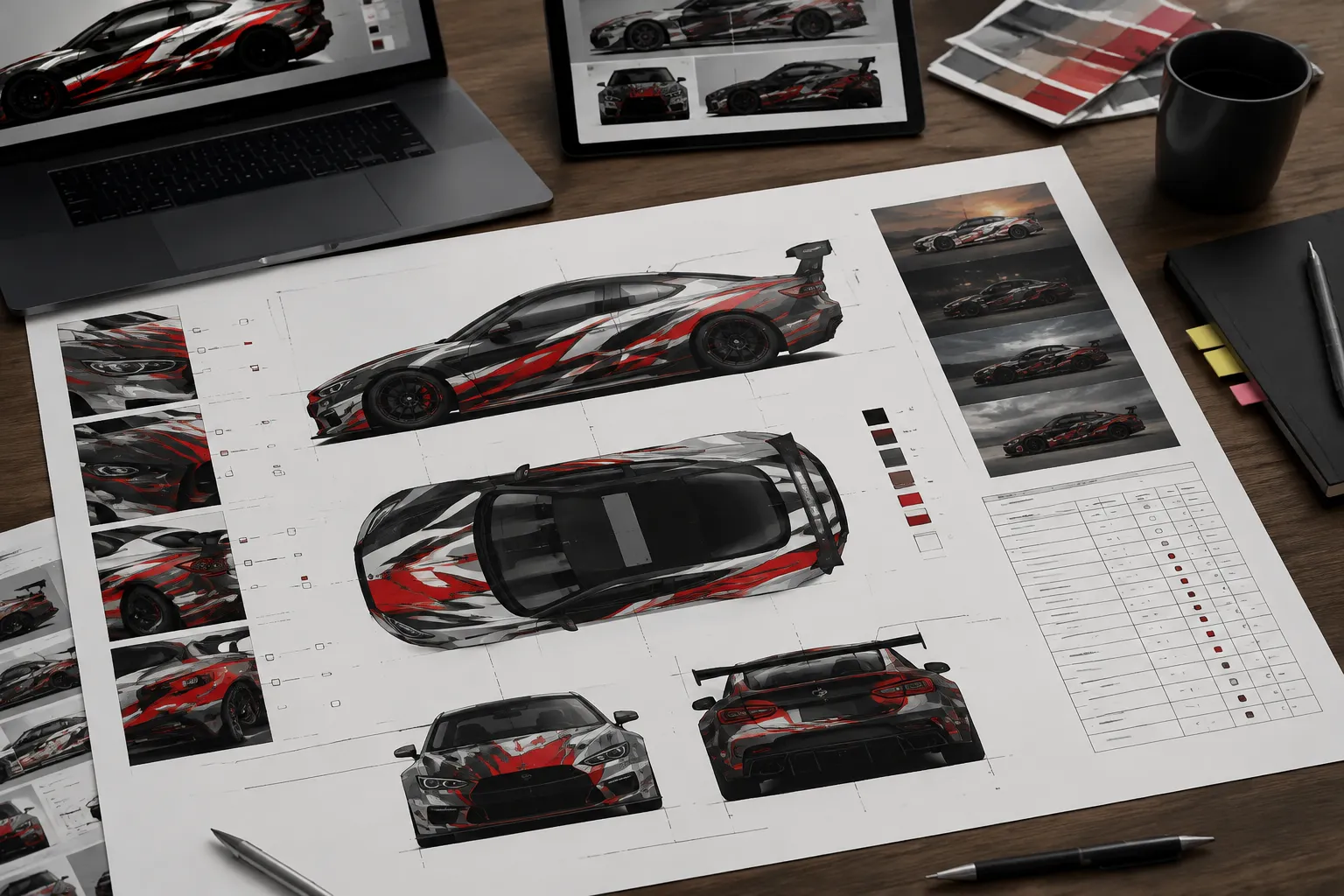
A livery review weakens when the team remembers the preferred direction but loses the reason behind it. Record the observation, condition, consequence, and owner for the next question.
A useful revision entry contains:
- Revision identifier
- Vehicle profile or template used
- Variant name
- Sponsor tier affected
- Surface affected
- Viewing condition
- Observable change
- Visible tradeoff
- Decision or open question
- Responsible owner
- Required document
- Next review stage
Revision B moves the associate sponsor from the rear door to the quarter panel. In the side-distance view, the mark has a less interrupted field, but the rear three-quarter view becomes more crowded. The designer should compare a reduced-size version; the rights holder must confirm whether the alternate surface remains within the agreement scope.
This record explains what changed without claiming improved sponsor value. Avoid notes such as “looks more professional” unless the note identifies the visible reason. Use observations about contrast, spacing, panel interruption, identity balance, or viewing condition.
Record the reason, not only the preference.
Prepare the Approval Handoff
The approval mockup should make the next decision easy to locate. Include the complete vehicle profile, relevant angles, sponsor tiers, colorway version, identification areas, and unresolved dependencies.
Designer
- Sponsor tier mapping
- Colorway alternatives
- Relative prominence in the mockup
- Panel-specific placement
- Contrast and surrounding fields
- Full-vehicle and close-view comparisons
- Revision record updates
Rights Holder or Sponsor Contact
- Approved logo files
- Permitted mark versions
- Color and wording requirements
- Agreement scope
- Category or exclusivity questions
- Use across the vehicle and related materials
- Required approval sequence
Series, Governing Body, or Applicable Authority
- Current identification requirements
- Event or series advertising rules
- Required forms or documentation
- Restrictions applying to the specific vehicle or event
- Local or jurisdiction-specific requirements
Do not infer these answers from a generic template or another series' terminology.
Producer and Installer
- Current vehicle measurements
- Actual panel mapping
- File and preflight requirements
- Surface-specific production questions
- Material-system questions
- Seams, handles, windows, vents, and finishing conditions
- Installation review requirements
A 3D render supports concept comparison and approval discussion. It does not establish measurement accuracy, print accuracy, material suitability, vehicle fit, or installation status.
A Compact Sponsor Hierarchy Review Workflow
- Read the agreement. Extract sponsor tiers, required marks, scope, restrictions, and approval owners.
- Confirm the vehicle profile. Use the actual vehicle identity, body lines, doors, windows, arches, vents, seams, and relevant aero surfaces.
- Map the fields. Place each tier on proposed surfaces without assuming that one prominent panel is universally superior.
- Build colorway variants. Keep sponsor requirements constant while testing changes to the base, identity, accents, and sponsor fields.
- Name the viewing conditions. Include close, distance, stationary, motion-oriented, broadcast-style, event-photo, and fleet views where relevant.
- Compare the same variant. Record first read, sponsor separation, whole-car identity, and surface interruptions.
- Resolve hierarchy conflicts. Identify sponsor-versus-identity, contrast-versus-palette, repetition-versus-crowding, and number-versus-logo issues.
- Check rights and rules separately. Route permissions, category restrictions, identification requirements, and local questions to the responsible party.
- Update the revision record. Preserve the condition, observation, tradeoff, decision, and unresolved dependency.
- Assign the next handoff. Send each question to the designer, rights holder, series, vehicle owner, producer, or installer who can answer it.
The workflow produces a reviewable concept direction. It does not convert the concept into production authorization.
Common Misunderstandings
Is the largest logo automatically the primary sponsor?
No. “Primary sponsor” is an agreement or industry label, while visual prominence depends on the approved scope and vehicle-specific layout. A large mark can be weakened by a seam, low contrast, or a crowded field.
Which vehicle panel is best for sponsor visibility?
There is no universal answer in the available material. Compare proposed surfaces on the actual vehicle profile and under the viewing conditions that matter to the project.
Does high contrast establish visibility at distance or in motion?
No. High contrast can improve separation in a particular mockup, but it does not establish recognition across motion, broadcast, event photography, or road-use conditions.
Can NASCAR-style sponsor tiers be used for every livery?
They can provide useful vocabulary, including primary and associate sponsor, but they are not universal rules. Confirm the terminology and obligations in the specific agreement, series, or project.
Does a 3D render establish vehicle fit?
No. It supports concept comparison and approval discussion. Vehicle-specific measurements, current templates, production files, material questions, and installation review remain separate responsibilities.
Should every sponsor appear on the vehicle?
Not necessarily. The agreement may include non-vehicle deliverables or different forms of sponsor exposure. Separate vehicle placement from apparel, banners, transporters, digital content, appearances, and event materials.
How should an unresolved placement be recorded?
Name the affected tier and surface, state the viewing condition, describe the visible tradeoff, and assign the next question to its owner. Preserve both the selected direction and the dependency awaiting confirmation.
Final Review Position
A defensible livery sponsor hierarchy connects sponsor scope, vehicle geometry, viewing condition, and approval ownership in one review record.
The concept-stage review should distinguish primary, associate, identity, number, and decorative roles; compare sponsor fields on the actual vehicle profile; test the same hierarchy under relevant viewing conditions; and separate visual observations from rights, rules, measurements, preflight, production, and installation decisions.
The available material does not validate a universal panel ranking, visibility result, sponsor value, road-use outcome, rights status, material suitability, print accuracy, vehicle fit, or installation result. Keep those questions attached to current project documents and the responsible party.
Close the review when the team can name the selected direction, explain the visible tradeoff, preserve the rejected alternatives, and identify the next confirmation required.
Sources
- NCR Updates: 2026 Edition 4 - Motorsport UK - supports the narrow distinction between competition documentation, entrant responsibility, and confirmation of applicable requirements.
- Sporting Regulations - Federation Internationale de l'Automobile - reference point for series-specific sporting and advertising-rule review.
- Vehicle Identification Requirements for Solo (Rule 3.7) - example of vehicle identification requirements that apply within a stated competition context.
- ExposureEngine: Oriented Logo Detection and Sponsor Visibility Analytics in Sports Broadcasts - supports treating orientation, framing, and broadcast exposure as separate viewing conditions.
- Vehicle Logo Recognition Using Spatial Structure Correlation and YOLO-T - supports the distinction between spatial logo structure and a broader claim about human recognition in use.
- An investigation into motorsport sponsorship: a comparative analysis of two and four wheeled sponsorship - provides sponsorship-context terminology without establishing a universal hierarchy or sponsor-value outcome.
- Motor racing, tobacco company sponsorship, barcodes and alibi marketing - provides historical context for restricted categories and indirect branding review.