Racing Livery and Sponsor Layout Planning
A racing livery design has to work as more than a collection of colours and logos. It needs to express team identity, accommodate the competition number and required marks, reflect current sponsor rights, follow the vehicle's actual surfaces, and remain reviewable from the views that matter.
The first concept does not need to settle every production question. It should make the important visual decisions visible enough for the team, designer, producer, installer, vehicle owner, series organiser, and rights holders to review them separately.
The useful starting question is simple: where should each mark appear, and what should remain recognisable when the vehicle is no longer seen as a flat side drawing?
That question leads to a more useful review than assigning every sponsor a fixed location from a generic tier label. A mockup can show a proposed visual relationship. It cannot establish contractual permission, series approval, vehicle fit, material suitability, print accuracy, or installation status.
More specific pages
These pages continue the topic in smaller, more specific directions.
What the Concept Needs to Establish
At root level, the concept connects five decisions:
- What makes the team recognisable when sponsor marks are removed?
- Which competition number and mandatory marks apply to the actual series, class, vehicle category, and event?
- What does each current sponsor agreement permit or require?
- Which areas of this vehicle can carry the intended hierarchy without awkward interruptions?
- Does that hierarchy hold across the views and viewing conditions relevant to the project?
Keep the result in a working record. A mockup may show that one sponsor reads more clearly on a quarter panel than beside a crowded door seam. The rights holder or responsible producer must still confirm whether that position, logo version, size, and colour treatment are allowed.
The concept is therefore a reviewable direction, not a production authorisation. It should make uncertainty assignable: each unresolved question needs a responsible person or organisation and a current document, measurement, specification, or approval record.
Start With Team Identity
Sponsor marks often arrive before the visual system is settled. That reverses the design decision. Begin by describing the team identity in observable terms:
- Which colours define the team across the vehicle?
- Does recognition depend on a stripe, shape, number panel, accent colour, or repeated graphic?
- Which element should remain identifiable when sponsor marks are covered?
- Which areas need visual quiet so the car does not become a disconnected stack of logos?
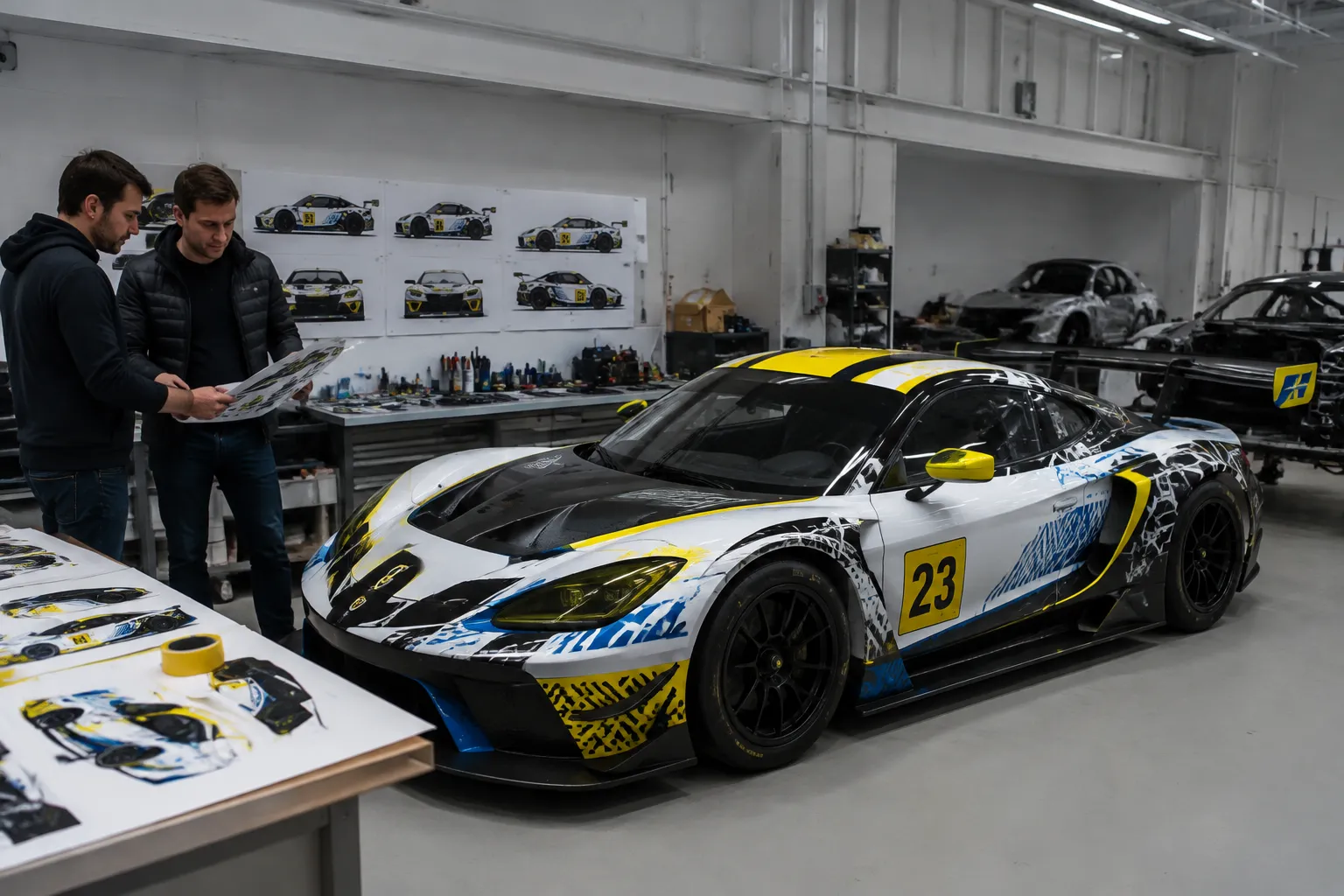
A team identity review is not a brand manifesto. It tests what survives across the body. A dark base with a narrow accent stripe may look coherent in a side elevation but break at the wheel arch, mirror, or rear bumper. A large colour block may preserve recognition across the side profile while competing with the competition number on the door. The visible tradeoff belongs in the concept record.
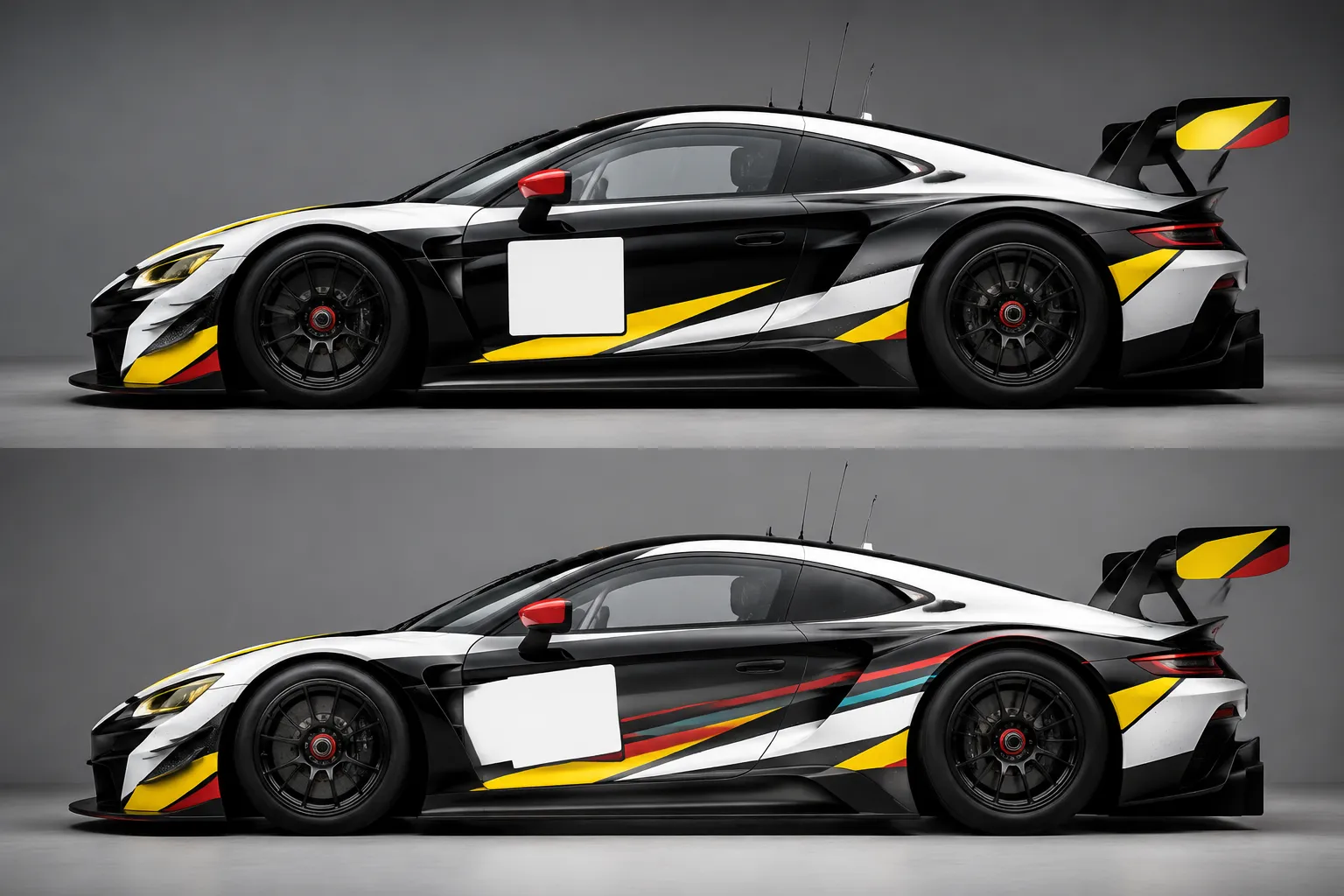
When the direction is uncertain, compare matched variants. Keep the vehicle profile, camera position, crop, and lighting consistent. Change one meaningful variable, such as the accent stripe position or number-panel size, so the visual consequence is identifiable.
A convincing colourway remains a concept direction. Approved colour data and reproduction requirements still require confirmation from the responsible producer and rights holders before artwork handoff.
Review the Competition Number and Required Marks Early
The competition number is part of the livery's recognition system. It should appear in the first serious layout pass rather than being fitted into whatever space remains.
Place the number alongside the team identity and sponsor marks, together with any decals required by the applicable series, class, vehicle category, or event document. Requirements vary. A rulebook or graphics schedule from one competition cannot be combined with another to create a universal placement system.
The current controlling document may address:
- Number dimensions and permitted treatments
- Contrast or background requirements
- Required sides or surfaces
- Mandatory decals and reserved graphic areas
- Permitted modifications
- Approval or written-consent procedures
Check the exact document and edition for the actual competition. A summary, historical car, image, or secondary listing cannot establish a current requirement for another series or vehicle category.
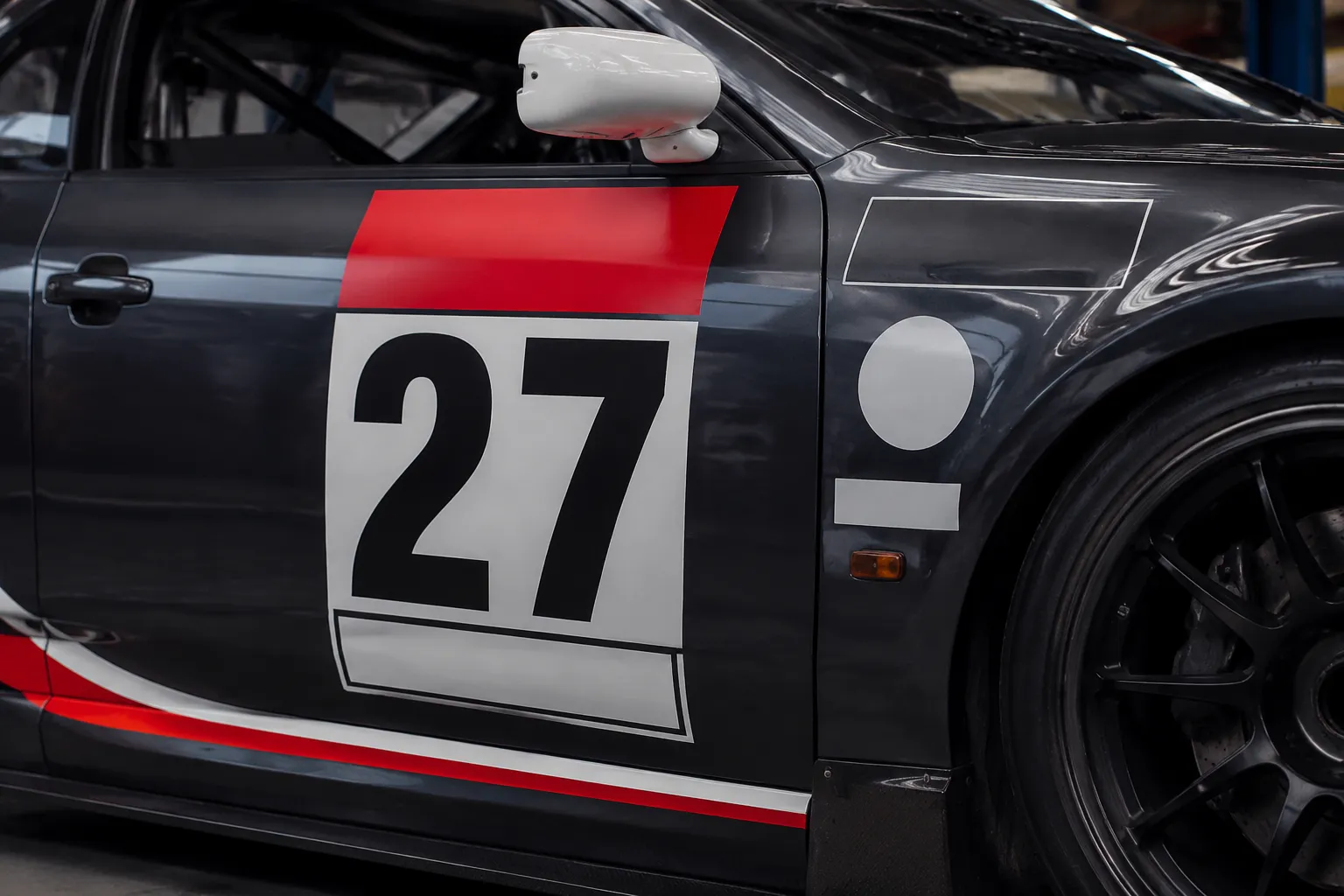
For the visual review, compare the number against the identity and sponsor hierarchy at the same time. Look for contrast against the base colour, separation from nearby marks, interruption by a door seam or contour, scale within the side profile, recognition at a wider crop, and possible confusion between the number and a sponsor symbol.
A number that reads in a close mockup may lose distinction in a front or rear approach view. A larger number panel may preserve recognition while reducing space for a sponsor mark. Record the tradeoff rather than describing one arrangement as universally correct.
Use Sponsor Tiers as a Starting Point, Not a Placement Rule
Labels such as primary, associate, supporting, technical, gold, or silver are useful shorthand. They do not automatically define logo size, vehicle position, exclusivity, or surrounding space.
The current rights package matters more than the label. A simple rights ledger keeps the visual conversation separate from the permission question:
| Record | Question to resolve |
|---|---|
| Sponsor or partner | Which approved name and logo are being used? |
| Governing agreement | Which current document controls the appearance? |
| Deliverable | Is the vehicle mark part of the agreed inventory? |
| Position | Does the agreement name a surface or candidate zone? |
| Scale | Is a minimum, maximum, or proportional treatment specified? |
| Exclusivity | Could a category restriction affect nearby marks? |
| Assets | Which logo variant, colour, orientation, and artwork are approved? |
| Approval owner | Who must review the placement? |
| Open question | What remains unconfirmed? |
This turns “Which sponsor matters most?” into two separate questions:
- Which visual role should the sponsor occupy in this concept?
- What position and treatment does the current agreement permit or require?
Those answers may align, but they should not be assumed to do so. A sponsor may have a prominent contractual position that sits awkwardly beside the number panel. Another may have a smaller agreed area that remains highly visible in the likely side profile. The concept review can show the visual result. It cannot grant a right that is absent from the agreement.
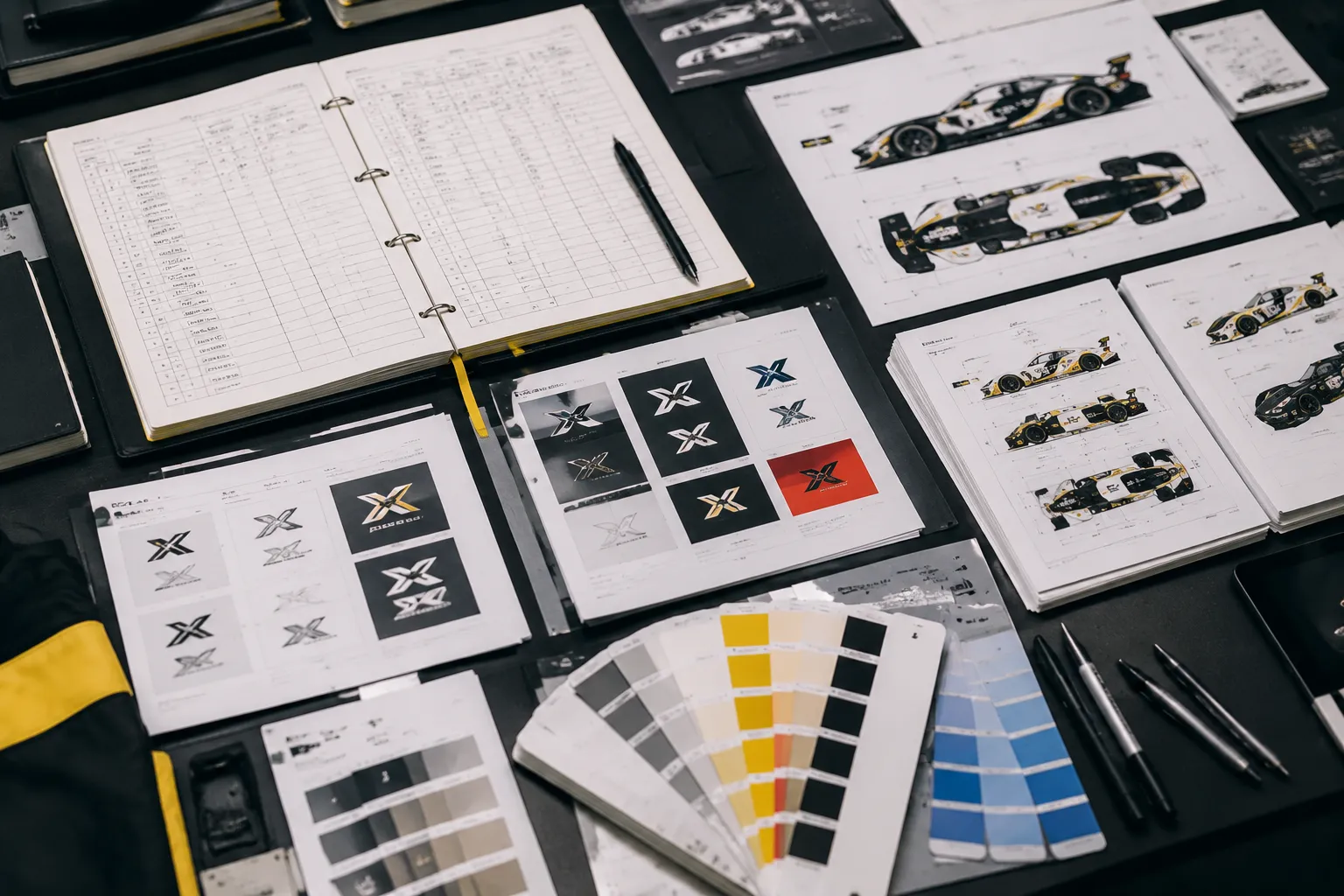
Map the Actual Vehicle Before Assigning Zones
Doors and hoods are often described as prominent sponsor areas in market-facing material. That language is a starting point, not a placement rule. The actual vehicle profile changes the judgement.
Build the first inventory on the actual vehicle or a vehicle-specific template. Mark:
- Panel boundaries, wheel arches, and door seams
- Handles, vents, mirrors, wings, and endplates
- Glass edges and glass-adjacent areas
- Surfaces that change angle sharply
- Areas that have not yet been measured or mapped
Then place the same approved sponsor artwork in two or three candidate zones at an approximately consistent scale. Compare the visible differences rather than asking which area is simply largest.
- Does a panel break divide the name or symbol?
- Does the contour distort the intended relationship?
- Does the number retain enough room to read?
- Does the zone remain visible in the expected view?
- Does it conflict with a mandatory decal?
- Is the area available under the current rights package?
A candidate zone is a planning object until vehicle measurements, rights documents, production specifications, and responsible approvals confirm it. A flat side drawing can hide interruptions that become decisive on the vehicle.
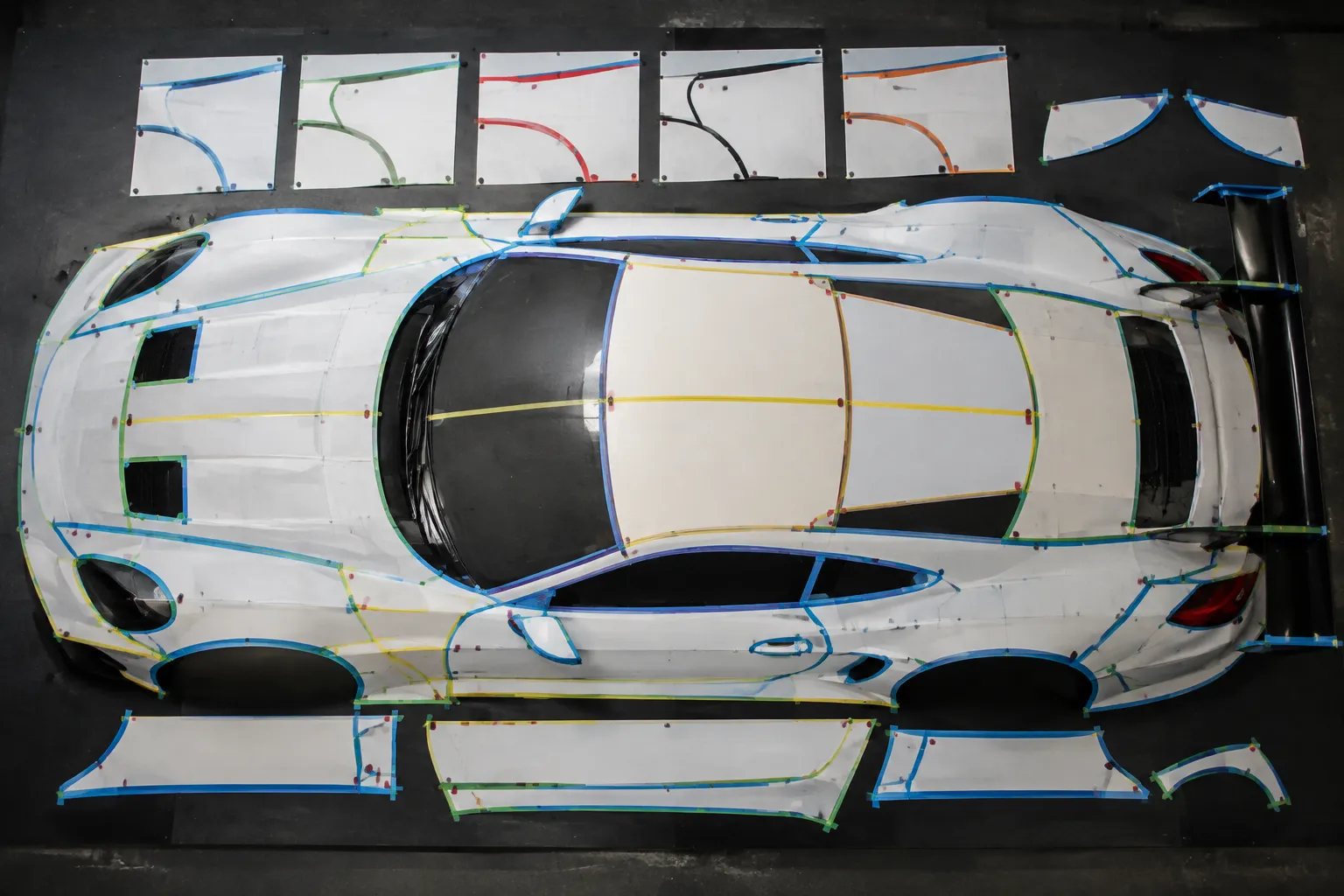
Compare Sponsor Placement View by View
A single side profile is not enough for a racing livery design review. The vehicle will be encountered from several directions, at different distances, and sometimes through a cropped camera frame.
Choose a view set that matches the project:
- Stationary close view
- Full side profile
- Front and rear approach
- Three-quarter front and rear views
- Likely broadcast framing
- Wider-distance view
- Motion-oriented concept view
These views do not establish real-world visibility. They reveal whether the intended hierarchy remains coherent under selected conditions.
In the close view, inspect logo contrast, spacing, and panel interruption. In the side profile, check the relationship among the main sponsor, team identity, number, and body line. In front and rear approaches, note what disappears when the side surface is no longer dominant.
A broadcast-style crop can reveal a different issue. A mark may have a strong position on the vehicle but rarely enter the chosen frame. State that observation narrowly: in this mockup and crop, the mark appears less often or with less surrounding space. Do not turn one crop into a general exposure claim.
The same discipline applies to distance and motion. Motion-oriented renders are comparison aids, not controlled performance tests. Label them as concept-stage views and name the condition under which the comparison was made.
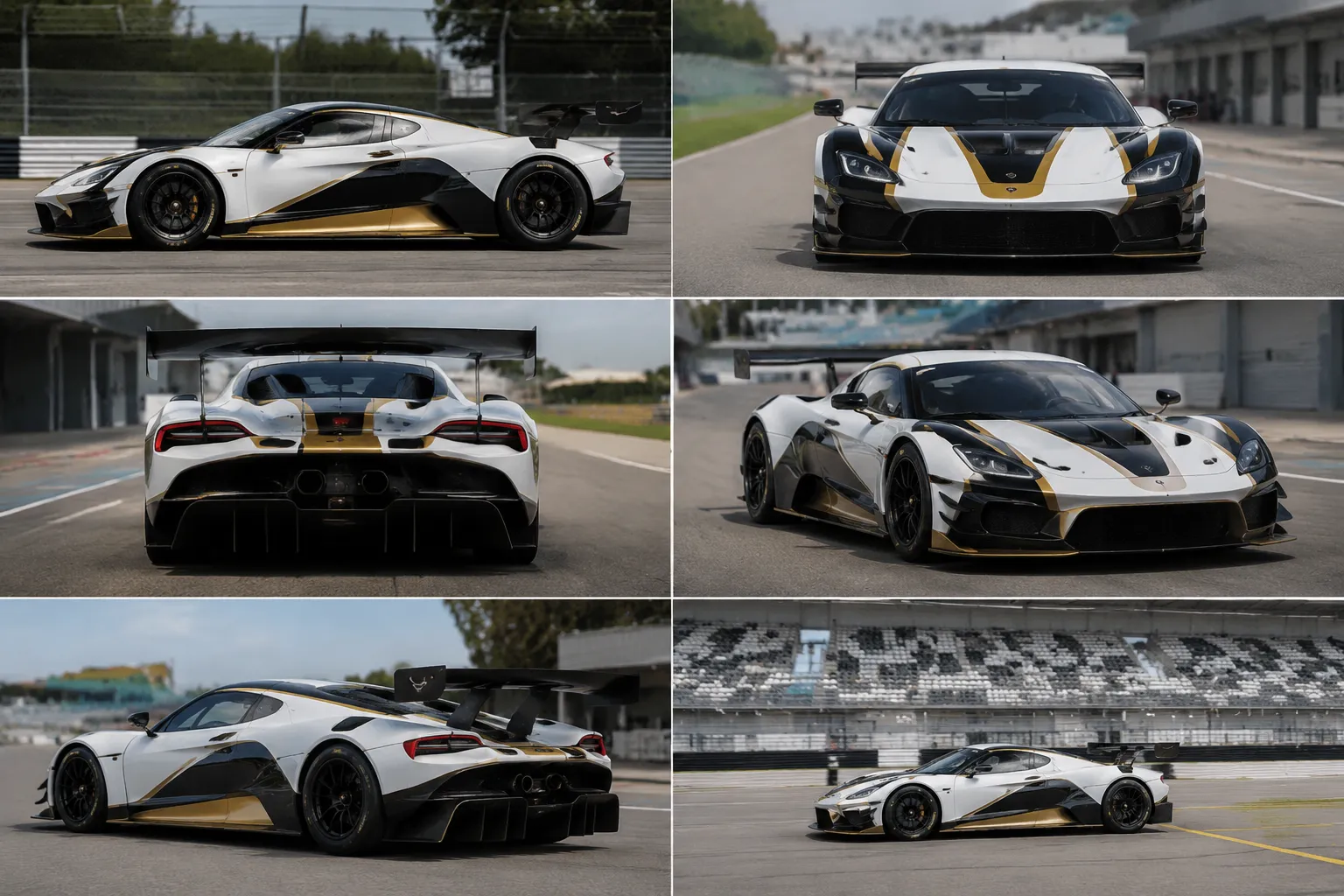
Check Hierarchy Without Building a Logo Stack
Sponsor hierarchy is visible through more than logo size. Position, contrast, isolation, repetition, orientation, and the amount of competing information nearby all affect how the arrangement reads.
A hierarchy review can ask:
- What is seen first in the side profile?
- What identifies the team if sponsor marks are covered?
- Which sponsor remains recognisable at a reduced crop?
- Does the competition number retain its own visual role?
- Are smaller marks grouped as a supporting system?
- Does the base graphic provide enough separation?
- Does repetition strengthen recognition or create clutter?
The aim is not to make every logo equally prominent. Equal treatment can erase the distinction that the rights package is meant to communicate. The aim is to make the intended order observable without damaging team identity or number recognition.
Compare variants under the same conditions. One may give the largest sponsor a wide, isolated field. Another may preserve more of the team stripe while distributing smaller marks across the side. The visible tradeoff is between sponsor emphasis and system continuity. The appropriate direction depends on the documented rights, vehicle profile, and identity intent.
Keep Required Decals Separate From Sponsor Preference
Mandatory decal placement can override an attractive arrangement or occupy an area that a general sponsor plan assumes is available. Classify the marks before the layout becomes crowded:
- Required by the current competition document
- Required by the vehicle owner or event
- Required by a sponsor agreement
- Optional team or partner marks
- Awaiting confirmation
Do not infer a current requirement from a historical car, another team, a different class, or a different series. Official materials have a defined scope. Motorsport UK, FIA, Porsche, and other governing or series sources may describe their own requirements, but those documents do not combine into one universal rule set.
If a required mark conflicts with the planned number, team graphic, or sponsor zone, record the conflict and route it to the responsible party. The designer can show alternatives. The series organiser or rights holder must answer the applicable requirement.
Record the Handoff Questions
A root-level review should end with a clear handoff, not a declaration that the concept is ready to produce. Keep three records distinct:
| Record | What it should contain |
|---|---|
| Visual concept | Team identity direction, number treatment, sponsor hierarchy, candidate panel zones, matched views, visible tradeoffs, and unresolved visual choices. |
| Rights and rules | Current sponsor agreements, approved logo variants, mandatory marks, relevant series and class, restrictions, approval owners, and missing documents or consent. |
| Production handoff | Vehicle measurements, panel templates, artwork scale, file structure, colour specifications, material requirements, glass-adjacent restrictions, preflight questions, and installation constraints. |
Different questions may belong to the producer, manufacturer, installer, vehicle owner, series organiser, or rights holder. Assign each question to the person or organisation able to confirm it.
Generic advice about colour modes, simplified marks, or monochrome versions can raise useful production questions. It does not replace approved brand assets or the producer's current specifications.
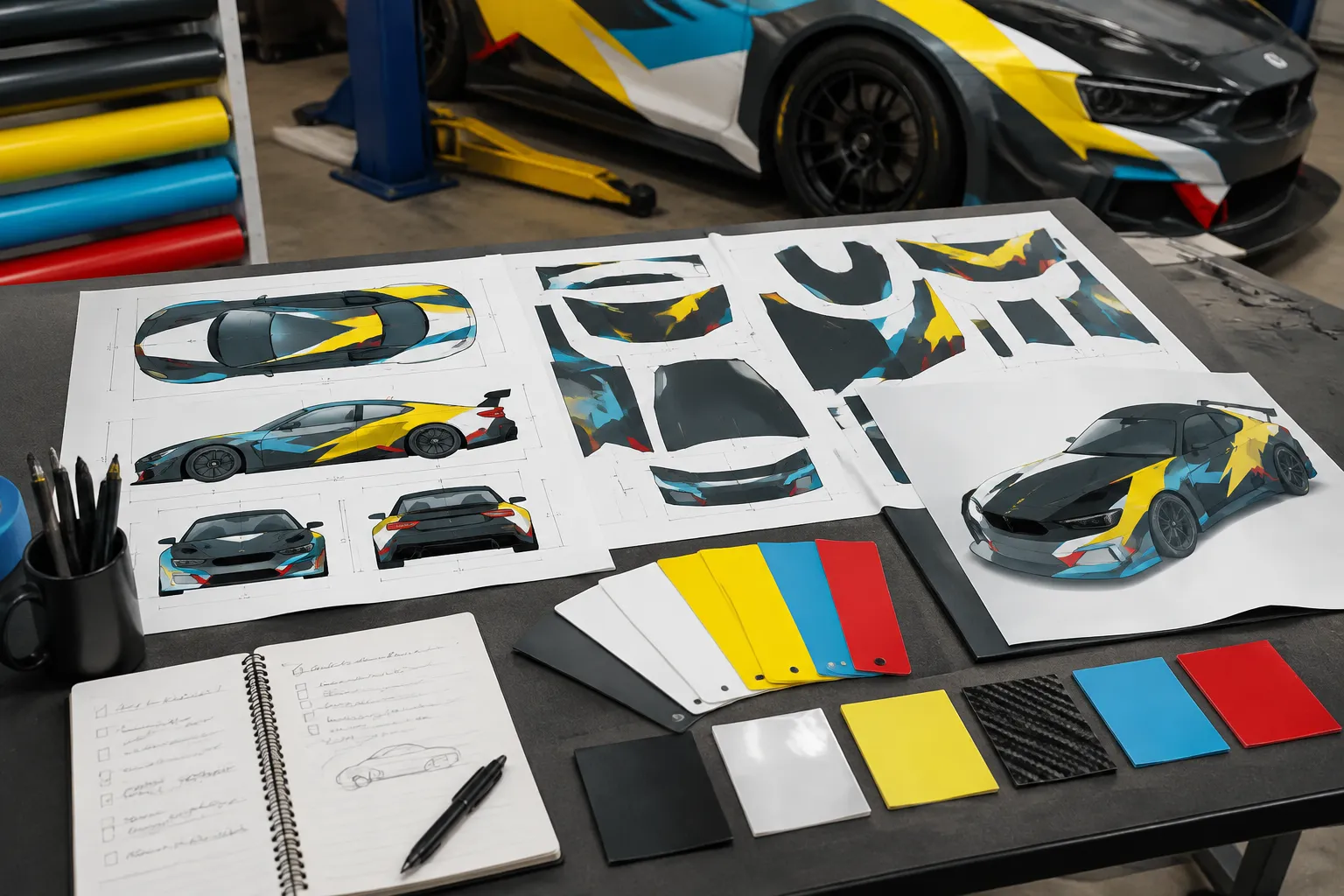
Common Planning Errors
- Starting with sponsor labels. A tier name can suggest priority, but it does not establish a panel, scale, or exclusive position. Start with the rights ledger and the actual vehicle profile.
- Designing the side view in isolation. A side elevation can make a mark look dominant while front, rear, or three-quarter views leave it hidden or interrupted. Use matched comparisons.
- Adding the competition number late. Late placement can force the number into a weak contrast area or compress the sponsor hierarchy. Review it with the first identity and sponsor variants.
- Treating every visible area as equal inventory. A hood, door, mirror, wing, and quarter panel do not present the same surface, contour, or viewing condition.
- Using a historical livery as a rule. Historic references and isolated team or series examples can provide terminology or inspiration. They do not establish a universal layout for another vehicle or competition.
- Calling a mockup approved. A concept can show visual hierarchy without establishing rights, applicable requirements, print accuracy, material suitability, or installation status.
Prepare a Compact Review Brief
Before requesting detailed artwork, capture the decisions and open questions in one brief:
- What team identity must remain recognisable?
- Which competition number and required marks apply?
- Which current sponsor agreements govern the visible marks?
- Which logo variants and colours are approved?
- Which vehicle profile and measurements are being used?
- Which surfaces are candidate zones rather than confirmed placements?
- Which views will be compared?
- What does each variant demonstrate?
- What visible tradeoff remains?
- Who must confirm each unresolved question?
A strong brief does not pretend that uncertainty has disappeared. It makes the remaining work clear enough to review, revise, and hand off.
Choose the Next Review Path
Once the root concept is recorded, the next review can narrow into the question that is still changing the direction:
- Sponsor hierarchy planning: reconcile contracted prominence, team identity, and the visible limits of the concept.
- Team identity and competition number review: examine how identity and required identifiers share the most visible areas.
- View-by-view sponsor placement: compare candidate zones before vehicle-specific measurement and panel mapping.
- Distance and speed legibility review: compare concept variants under stationary, trackside, camera, distance, and motion-oriented conditions.
These are deeper review paths, not replacements for the root decision. Each should return to the same record: what the concept shows, under which viewing condition the observation holds, what remains unresolved, and who has authority to confirm it.
FAQ
What is racing livery design?
Racing livery design is the planning of a vehicle's visual identity across its colours, graphics, competition number, sponsor marks, and required decals. At concept stage, it is primarily a structured visual comparison tied to the actual vehicle and intended viewing conditions.
Where should sponsor logos go on a race car?
There is no universal best panel. Compare candidate areas such as doors, bonnet, quarter panels, mirrors, wings, and front or rear surfaces on the actual vehicle profile, then check them against current sponsor rights and applicable competition documents.
Does a primary sponsor always belong on the bonnet?
No fixed placement should be inferred from the label alone. The current agreement may define a position, or it may leave the visual arrangement open for review. Confirm the agreement before treating a bonnet position as available or required.
What is mandatory decal placement?
Mandatory decal placement is the required location or treatment of marks specified by an applicable competition, series, event, vehicle owner, or agreement document. The controlling source must be current and relevant to the exact jurisdiction, class, vehicle category, and edition.
How should sponsor visibility be reviewed?
Compare the same mark and variant across matched stationary, side, front, rear, distance, camera, and motion-oriented mockups. Describe contrast, scale, isolation, panel interruption, and what remains visible in each named condition. Do not turn a concept comparison into a measured visibility result.
Can a mockup confirm that a livery is approved?
No. A mockup supports visual discussion. Rights confirmation, required-decal review, vehicle measurement, production preflight, material selection, and installation sign-off belong to the responsible parties and current project documents.
What should happen before production artwork?
Confirm the rights package, approved logo assets, required marks, vehicle-specific measurements, panel templates, producer specifications, colour data, material requirements, and installation constraints. Record the approval owner for each item rather than treating visual agreement as production authorisation.
Sources
These sources illustrate why competition requirements must be checked against the applicable series, class, vehicle category, jurisdiction, and edition. They do not establish a universal sponsor layout or replace current project records.